Table of Contents
TL;DR
Event management is the process of planning, promoting, running, and evaluating events so they achieve a defined goal.
The key takeaways:
- It follows four phases: planning, promotion, execution and analysis.
- Successful event management depends on budgeting, negotiation, communication, and risk management.
- In 2026, technology and AI support every stage, while rising costs and proving ROI remain the top challenges.
Introduction
Business events are far bigger than most people realize. According to the Events Industry Council’s 2026 Global Economic Significance of Business Events Study, business events brought together 1.65 billion participants across more than 180 countries in 2025. They generated US1.3trillionindirectspending,contributedUS1.8 trillion to global GDP, and supported 24.2 million jobs worldwide. Oxford Economics forecasts direct spending will reach US$1.6 trillion by 2028.
Behind every one of those gatherings, whether a 50,000-person festival or a 40-person team retreat, is a team doing work most attendees never see. Someone secured the venue, negotiated with vendors, protected the budget, solved the problem nobody planned for, and made every guest feel like the event was designed just for them.
That is event management: the discipline of turning an idea into a live experience that actually delivers results. It is part project management, part hospitality, part marketing, and part crisis response, all carried out in front of a live audience where there is no chance to fix mistakes afterward. It is also a profession in transition, shaped by hybrid formats, personalization, AI tools, and growing pressure to prove ROI.
This guide covers what event management is, why it matters, the main event types, key responsibilities, the four-phase process, essential skills, the technology behind each stage, common challenges, and the trends shaping events in 2026 and beyond.
What is Event Management?
Event management is the process of planning, promoting, running and evaluating an event so it meets the organizer’s objectives and attendees’ expectations within an agreed budget and timeline.
In simple terms, event planning decides what the event will be, and event management makes sure it works. Planning covers the vision, the date, the venue and the program. Management takes that plan and carries it through to the end. It adds the strategy behind the event, control over the budget and suppliers, and the ability to make decisions when things change on the day. A planner can hand over a detailed schedule. A manager is accountable for whether the event achieves what it was meant to achieve.
That accountability is why event management is often described as the more critical, higher-stakes side of the work. A live event cannot be fixed after the fact. A late speaker, a failed stream, or a registration system that crashes at peak sign-up is visible to every attendee in real time. Event management is the discipline of anticipating those moments and having an answer ready.
It also applies to every kind of event:
- In-person events such as conferences, weddings, festivals and trade shows, where venues, logistics, crowd flow and on-site teams are the main concerns.
- Virtual events such as webinars and online summits, where registration, platform choice, streaming quality and digital engagement take the place of physical logistics.
- Hybrid events, which combine a live venue with a remote audience and need both experiences to be designed with equal care.
- Large events, with thousands of attendees, multiple stakeholders, strict safety rules and large budgets.
- Small events, such as a 40-person team retreat or an executive roundtable, where the scale is smaller but expectations for polish and personalization are often higher.
The format and size change the tools and the team. The core job stays the same: turning a goal into an experience that is organized, safe, on budget, and worth attending.
Why Is Event Management Important?
A well-run event advances a business, cause, or community; a poorly run one wastes money and damages reputations. Here is why professional event management matters.
It protects budgets and reduces risk. Structured planning helps organizers avoid overspending, negotiate better contracts, and prepare for weather, cancellations, or supplier failures.
It drives measurable business results. Events generate leads, launch products, and build partnerships, and good management ties each activity to a clear outcome.
It builds brand and relationships. Face-to-face and live digital interactions create trust that ads and emails cannot, and attendees carry that impression to the organization behind the event.
It creates a consistent attendee experience. Every touchpoint, from the first email to the follow-up survey, shapes how people see the event.
It ensures safety and compliance. Crowd management, permits, insurance, accessibility, and data protection are not optional.
It supports growth and repeatability. Documented processes and collected data let teams improve each edition instead of starting over.
What Are the Different Types of Event Management?
Each type of event has its own goals, audience, regulations and operational demands. These are the main ones.
1. Corporate Event Management
Corporate events are run by or for businesses, such as conferences, product launches, sales kickoffs, leadership summits, award dinners and shareholder meetings.
The focus is on business goals like lead generation, employee engagement and brand awareness. Managers must balance professionalism with creativity, coordinate stakeholders and show ROI to leadership.
Many organizations hire an outside agency for these events. When comparing corporate event management companies, define what success looks like, set a realistic budget, confirm the agency can support hybrid and digital formats, review past portfolios for fit with your brand, and test how well the team communicates.
2. Entertainment and Cultural Event Management
This category covers concerts, festivals, theater, film premieres, sports competitions, and cultural celebrations, where the attendee experience is the product itself.
Managers handle talent coordination, ticketing, stage production, crowd flow, security, sponsorships, and licensing. With large, emotional crowds, safety planning and real-time communication are critical.
3. Exhibition and Trade Show Management
Exhibitions and trade shows bring buyers and sellers together: exhibitors rent booths to showcase products, while visitors explore, network, and make purchasing decisions.
Managers design floor plans, sell space, coordinate booth logistics, organize side programs, and track lead capture. Exhibitor satisfaction and visitor quality are the main success measures.
4. Educational and Academic Event Management
Universities, schools, and professional bodies run conferences, graduation ceremonies, career fairs, workshops, and alumni gatherings.
These events involve calls for papers, session scheduling, accreditation and tight budgets, so accessibility and strong content matter more than glamour.
5. Nonprofit and Fundraising Event Management
Galas, charity auctions, walkathons, and benefit concerts help nonprofits raise money and awareness. The funding target is the central metric, but storytelling and donor relationships matter just as much.
Managers work with limited budgets, rely on volunteers and sponsors, and must follow fundraising regulations and report transparently. Cost efficiency and emotional engagement are the priorities.
6. Government and Public Event Management
Government and public events include national celebrations, civic ceremonies, community festivals, rallies, parades and official summits.
They carry strict regulatory, security and protocol requirements. Managers coordinate with police, emergency services, transport authorities and government departments while planning for large crowds and high visibility.
7. Virtual and Hybrid Event Management
Virtual events take place entirely online, while hybrid events combine an in-person gathering with a digital audience. Webinars, virtual summits, and livestreamed conferences are common examples.
These formats call for platform selection, streaming production, digital engagement design, cybersecurity, and technical support. Choosing the right virtual event platform is one of the most important decisions, since it shapes how attendees watch sessions, interact with speakers, network, and visit sponsor booths. A hybrid event is effectively two events at once, so the remote audience needs its own experience rather than a passive livestream.
The format remains commercially significant: webinars generated 45.75% of virtual events market revenue in 2025, according to Upmetrics.
What Are the Key Responsibilities of an Event Manager?
An event manager is accountable for an event from concept to close-out. Event management duties vary, but most roles include the following.
Setting objectives and strategy. Defining with stakeholders why the event exists, who it is for, and how success will be measured.
Budgeting and financial control. Building the budget, tracking expenses and revenue, approving invoices and reporting on results.
Venue and vendor management. Sourcing and negotiating with venues and suppliers, and making sure contracts are honored.
Program and content design. Developing the agenda, booking speakers or performers, and shaping the attendee experience.
Marketing and registration oversight. Coordinating promotion, managing registration or ticketing systems, and monitoring sales and attendance targets.
Logistics and operations. Handling timelines, production schedules, transport, accommodation, accessibility and on-site setup.
Team and volunteer leadership. Briefing staff, assigning roles and keeping everyone aligned under pressure.
Risk, safety and compliance management. Obtaining permits and insurance, preparing emergency plans and protecting attendee data.
Stakeholder and sponsor communication. Keeping clients, sponsors, speakers and partners informed.
Evaluation and reporting. Collecting feedback, analyzing data, calculating ROI and recording lessons for next time.
Few events can be run well by one person. Larger programs usually need a dedicated management team covering logistics, vendors and on-site technology, often with an event tech partner for registration, check-in and analytics.
How Does the Event Management Process Work?
Most professional event management follows a four-phase lifecycle. The phases overlap in practice, but thinking in stages keeps teams organized and prevents missed steps.
Phase 1: Event Planning and Design
This phase is the foundation: the decisions made here shape everything that follows.
- Define the purpose and objectives. Set specific, measurable goals, such as “generate 300 qualified leads” rather than “raise awareness.”
- Identify the target audience. Understand who will attend and what will motivate them to show up.
- Set the budget. List expected costs and revenue sources, and keep a contingency reserve of 10 to 15 percent.
- Choose the date, format, and venue. Weigh audience availability, competing events, accessibility, capacity, and whether to go in-person, virtual, or hybrid.
- Build the team and timeline. Assign responsibilities and plan a master schedule backward from the event date.
- Design the program and experience. Select themes, speakers, activities, and engagement formats.
- Risk plan. Identify what could go wrong and prepare backup options and response procedures.
The output of this phase is usually an event plan or brief that all stakeholders sign off on.
Phase 2: Event Promotion and Registration
A great event still fails if nobody knows about it. This phase turns the plan into attendance.
- Create a marketing plan. Combine email, social media, search, paid ads, partners and PR.
- Build an event website or landing page. Include the value proposition, agenda, speakers, pricing and a clear call to action.
- Set up registration and ticketing. Keep sign-up fast and mobile-friendly, and collect only the data you need.
- Use phased messaging. Early-bird offers, speaker announcements and countdown reminders keep momentum going.
- Track performance. Monitor registrations by channel and adjust if you fall behind target.
- Engage sponsors and exhibitors. Give them promotional assets and clear deliverables.
Phase 3: Event Execution and On-Site Management
This is the live phase, where preparation meets reality.
- Run advance checks. Walk the venue, test equipment, confirm vendors, and brief the whole team.
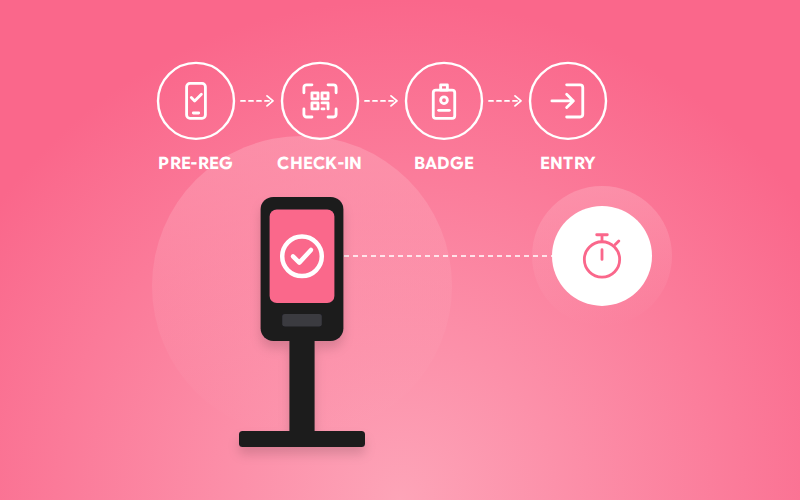
- Manage check-in and attendee flow. Efficient registration and clear signage set the tone in the first few minutes.
- Keep the program on schedule. Stage and floor managers coordinate timings and speaker handoffs.
- Communicate in real time. Use radios, messaging apps or an operations platform to resolve issues quickly.
- Handle problems calmly. Something will go wrong, so contingency plans and an empowered team keep small issues small.
- Monitor safety and compliance. Watch capacity limits, emergency exits and security throughout.
- Capture content and feedback. Photos, video, live polls and social monitoring feed post-event use.
Phase 4: Post-Event Management and Analysis
The event is not over when the doors close. This phase turns the experience into insight and lasting value.
- Wrap up logistics. Dismantle the setup, return equipment, settle invoices, and close contracts.
- Thank stakeholders. Send appreciation to attendees, speakers, sponsors, volunteers, and partners.
- Collect feedback. Use surveys and session ratings while impressions are fresh.
- Analyze the data. Review attendance, engagement, satisfaction, lead quality, revenue, costs and ROI against your objectives.
- Follow up. Pass leads to sales promptly and share recordings and highlights.
- Document lessons learned. Record what worked, what did not and what to change.
- Report to stakeholders. Summarize outcomes with numbers and attendee stories.
What Are the Essential Event Management Skills?
Event management rewards people who think strategically and act decisively. These skills matter most.
Organization and time management. Hundreds of moving pieces and fixed deadlines demand checklists, timelines and project management methods.
Budgeting and financial acumen. Managing costs, forecasting revenue and spotting hidden fees protects profitability.
Communication. Clear, concise and diplomatic communication with clients, vendors, volunteers and attendees prevents misunderstandings.
Negotiation. Favorable rates and terms from venues and suppliers directly affect the bottom line and event quality.
Problem solving and adaptability. Live events rarely go to plan, so staying calm and deciding fast is essential.
Leadership and teamwork. Managers guide mixed teams of employees, freelancers and volunteers, often with little time to build relationships.
Creativity. Distinctive themes and formats set events apart in a crowded market.
Attention to detail. A misspelled name or overlooked permit can derail an otherwise strong event.
Technical and digital literacy. Comfort with registration, streaming and analytics tools is now a baseline requirement.
Risk management. Anticipating hazards and building contingency plans keeps people safe and events running.
Data analysis. Turning metrics into recommendations increasingly separates strategic professionals from purely logistical ones.
Building an Event Management Strategy: There’s Tech for Every Stage
The right technology makes event management faster and more accurate, and generates the data you need to improve. Here is how it maps onto each stage.
| Event Stage | What You Need to Do | Technology Solutions |
| Planning and design | Set goals, build budgets, manage tasks, source venues and vendors | Project management tools, budgeting spreadsheets, venue sourcing platforms, event planning software, AI planning assistants |
| Promotion | Reach the right audience and drive sign-ups | Email marketing platforms, social media schedulers, CRM systems, event websites and landing page builders, paid advertising tools, AI content assistants |
| Registration and ticketing | Collect sign-ups, process payments, segment attendees | Online registration and ticketing platforms, payment gateways, discount code and group booking features, attendee databases |
| Pre-event engagement | Keep registrants informed and excited | Event mobile apps, automated email sequences, personalized agendas, networking and matchmaking tools |
| On-site execution | Event Check-in, session management, communication, safety | QR code and badge scanning, RFID wristbands, facial recognition check-in (where lawful), staff messaging apps, crowd monitoring, digital signage |
| Virtual and hybrid delivery | Stream content and engage remote attendees | Streaming and virtual event platforms, live chat, polling and Q&A tools, breakout rooms, captioning and translation tools |
| Sponsor and exhibitor management | Deliver value to partners and capture leads | Lead retrieval apps, exhibitor portals, sponsor dashboards, floor plan software |
| Post-event analysis | Measure success and follow up | Survey tools, analytics dashboards, CRM integration, attendee behavior tracking, on-demand content libraries, ROI reporting tools |
These tools are already mainstream. According to the ICE Annual Benchmarking Research Report, 91% of planners use registration platforms, 75% use hybrid event solutions, and 73% use web-streaming.
Registration software deserves extra scrutiny because it sits at the front of the attendee journey. When comparing options, check five things: user reviews, uptime reliability during peak sign-up periods, security certifications such as PCI DSS and SOC 2, payout speed, and the full fee structure including transaction and processing charges. For a side-by-side comparison of 18 platforms, see Dreamcast’s guide to the best event registration software.
A few principles help when building your technology stack:
- Start with the objective, not the tool. Choose software that supports your goals, not trendy features.
- Favor integration. Platforms that connect with your CRM, marketing, and analytics tools cut manual work and data silos.
- Prioritize the attendee experience. A tool that slows check-in or confuses participants is not helping.
- Protect data. Choose secure vendors and comply with privacy laws such as GDPR.
- Pilot before scaling. Test new technology at a smaller event first.
What Are the Biggest Challenges in Event Management?
Even experienced teams hit obstacles. These are the most common issues in 2026, with ways to address them.
Rising costs and tight budgets. Counter higher venue, travel and labor costs with early contracting, flexible dates, multi-year vendor deals and a contingency fund.
Proving ROI. Define success metrics up front, connect event data to your CRM and report outcomes such as pipeline influenced, not just attendance.
Rising attendee expectations. People expect personalization and seamless digital experiences, so use data to tailor agendas and cut filler.
Low engagement and attendance drop-off. Registrants often do not show up, especially at free or virtual events, so send timely reminders and design interactive formats.
Data privacy and cybersecurity. Events collect sensitive data, so use secure platforms, limit collection to what you need and keep consent clear.
Sustainability pressure. Attendees, sponsors and regulators expect lower-impact events, so reduce waste, source locally and go digital where possible.
Staffing and skills gaps. Experienced professionals and reliable freelancers are hard to find, so invest in training and document your processes.
Managing hybrid complexity. Serving in-person and online audiences takes extra resources, so treat the remote audience as a primary one with its own engagement plan.
Safety, security and unforeseen disruptions. Weather, health issues and security threats can derail prepared events, so keep risk assessments, insurance and rapid-response communication plans ready.
Technology overload. Too many disconnected tools create confusion, so audit your stack and consolidate.
The Future of Event Management
The next few years will change how event management is practiced and how events are designed and delivered. These trends are shaping the industry.
AI-powered planning and personalization. AI already supports agenda recommendations, matchmaking, forecasting and reporting, and will take over more routine tasks while human judgment still drives experience design and relationships.
Data-driven decision-making. Teams will use behavioral data, from session attendance to networking patterns, to refine programs in real time and prove impact.
Hybrid and digital-first formats. Virtual components extend reach and create year-round content, working alongside in-person elements rather than competing with them.
Immersive technology. Augmented reality, virtual reality and interactive installations make experiences more engaging, from product demos to gamified networking.
Sustainability as a standard. Eco-conscious venues, reduced waste and responsible sourcing will shift from differentiator to expectation.
Smaller, more purposeful gatherings. Curated events for specific audiences, such as executive roundtables, are growing alongside large flagships.
Frictionless, contactless operations. Mobile credentials, biometric check-in, and cashless payments will speed up logistics, with privacy safeguards growing in importance.
Community-centered experiences. Events are becoming part of an ongoing community strategy, with engagement continuing before and after the event.
Inclusion and accessibility by design. Accessible venues, captioning, and multilingual options will be core planning considerations, not afterthoughts.

Conclusion
Event management turns an idea into a live experience that achieves real objectives. Whether you are running a conference, a gala, a ceremony or a virtual summit, the fundamentals stay the same: define clear goals, plan carefully, promote effectively, execute with discipline, and learn from the results.
In 2026, technology and data have raised both the possibilities and the expectations. Teams that embrace smart tools, prioritize attendee experience, risk plan, and keep improving will stand out.
If you are just starting, follow the four-phase process in this guide and treat each event as a learning opportunity. Great event managers are made through preparation, practice, and a genuine focus on the people they serve.
Frequently Asked Questions
An event manager oversees an event from concept to completion: setting objectives, managing budgets and vendors, coordinating marketing, leading on-site teams and evaluating results.
Event planning covers design and preparation. Event management is broader, adding promotion, execution, supervision and evaluation.
The four stages are planning, promotion and registration, on-site execution, and post-event analysis.
Key skills include organization, budgeting, communication, negotiation, problem-solving, leadership, and technical literacy, with data analysis increasingly valuable.
Not necessarily. Many professionals enter through hospitality, marketing or business backgrounds, or through internships and volunteering. Degrees and certifications can help for senior roles, but practical experience and a strong portfolio carry a lot of weight.