
Table of Contents
TL;DR
Effective event arrival management helps conference organisers reduce queues, verify registrations, direct attendees, and maintain safe entry routes. Planning, clear signage, dedicated check-in lanes, trained staff, and suitable technology make large conference arrivals easier to manage.
Introduction
A conference can have excellent speakers and a well-planned agenda, but long queues at the entrance can affect the attendee experience before the first session begins. When hundreds or thousands of people arrive within a short period, registration desks, badge collection points, and security checks can quickly become congested.
Effective event arrival management helps organisers coordinate these activities, prepare for peak arrival times, and guide attendees through the venue safely.
The following best practices explain how to improve conference arrival management, strengthen event queue management, and create a smoother entry experience without compromising safety.
What Is Event Arrival Management?

Event arrival management is the process of planning and coordinating how attendees reach a venue, complete entry procedures, and move into the event space. It covers the arrival journey, from pre-event instructions to registration verification, queue organisation, and access control.
Consider a conference with thousands of attendees arriving before the opening keynote. Speakers, exhibitors, VIP guests,s and general delegates may have different entry requirements. Without a clear plan, they could end up waiting at the same counter or joining the wrong queue.
Effective conference arrival management brings these activities together through five essential elements:
- Pre-event communication: Sharing venue details, registration timings, and entry instructions.
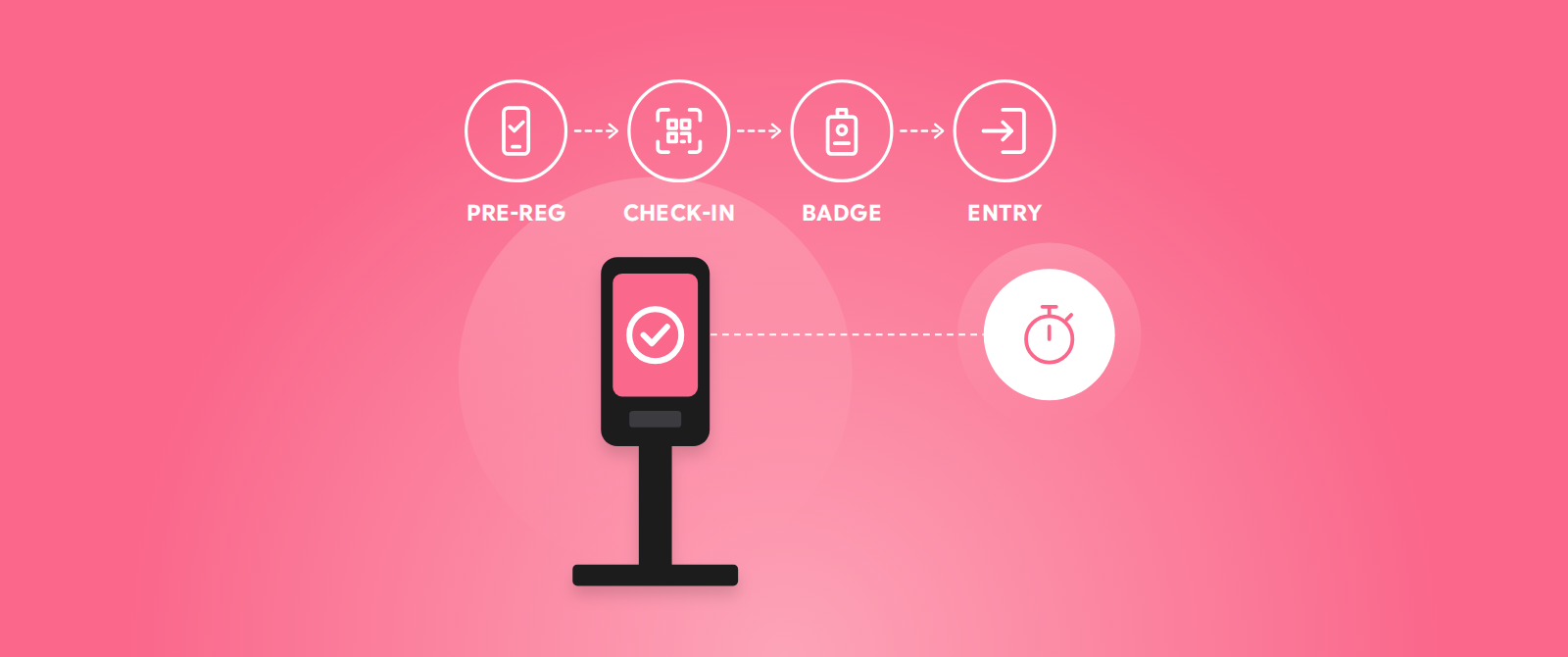
- Registration verification: Confirming attendee details through tickets, QR codes, or approved credentials. A suitable event check-in and badge printing solution can support registration verification and on-site entry workflows.
- Queue organisation: Directing attendees to the appropriate check-in counters and entry gates.
- Access control: Ensuring attendees enter areas permitted by their registration.
- Crowd monitoring: Identifying congestion and adjusting entry arrangements when necessary.
Why Arrival Planning Matters for Large Conferences
Large conferences often experience uneven arrival patterns. Many attendees may arrive shortly before the first session, putting pressure on registration counters and entrances. A structured arrival plan helps organisers manage these periods without compromising the attendee experience.
- Reduces waiting time: Advance registration, ready-to-scan credentials and clearly marked counters help attendees complete check-in without unnecessary searches or confusion.
- Supports crowd safety: Queues that block walkways, entrances, or emergency access routes can create hazards. The UK Health and Safety Executive (HSE) recommends planning queuing space, access routes, barriers, and stewarding as part of event crowd control. Its crowd management guidance explains how appropriate controls help prevent overcrowding and keep routes clear.
- Creates a better first impression: The entrance is often an attendee’s first interaction with the event team. Clear directions, helpful staff, and straightforward check-in establish a more organised and welcoming experience.
- Improves team coordination: Registration staff, security personnel, ushers, and venue teams need to follow the same arrival plan. Defined responsibilities help them respond consistently to delays, access issues, and attendee questions.
Key Challenges in Managing Conference Arrivals
Identifying likely bottlenecks helps organisers prepare solutions before attendees begin arriving.
Challenge 1: Peak-time congestion
Attendees may arrive in large groups just before the opening keynote. If the available check-in stations cannot process them quickly enough, queues can grow and obstruct nearby routes.
Challenge 2: Registration and badge collection delays
Manual searches, incorrect attendee details, missing confirmations, and on-site registrations can slow down entry. Badge collection can create an additional bottleneck when verification and printing take place at the same counter.
Challenge 3: Confusing signs and entry routes
Attendees who cannot distinguish between general registration, VIP access, speaker check-in, and on-site registration may join the wrong queue and need to start again.
Challenge 4: Different access requirements
Speakers, exhibitors, sponsors, and general delegates may require different credentials. A single undifferentiated entry process can create confusion and complicate access checks.
Challenge 5: Unexpected changes and technical failures
Unreadable QR codes, duplicate bookings, printer problems, and network disruptions can interrupt check-in. Without a backup process, one technical issue can delay multiple attendees.
These challenges show why managing large event crowds requires both practical venue planning and an efficient registration workflow.
6 Best Practices for Event Management During Conference Arrivals
A well-planned arrival process combines preparation, organised entry routes and clear staff responsibilities. These six practices help conferences manage arrivals efficiently and safely.
1. Forecast arrival patterns before the event
Estimate when attendees are most likely to arrive using registration numbers, previous event data, transport options and session timings. Use these estimates to plan check-in stations, staffing and queue space.
If the opening keynote starts at 10 a.m., prepare for a potential arrival surge during the preceding hour and communicate registration timings in advance.
2. Complete registration before attendees reach the venue
Collect attendee details, confirm registrations, issue tickets or QR codes, and share entry instructions before conference day. Provide a separate assistance process for onsite registrations, missing confirmations, and incorrect details so these cases do not delay routine check-ins.
Explore Dreamcast’s event registration platform and event check-in and badge printing solution for relevant registration and onsite entry workflows.
3. Design separate queues for different needs
Create clearly marked lanes for general check-in, onsite registration, badge assistance,e and special access categories where required. Attendees with valid QR codes can use a dedicated scanning lane, while those needing corrections visit an assistance desk.
Effective event queue management also requires sufficient space, visible signage, trained staff, and unobstructed emergency routes. Avoid creating more queues than the available space and staffing can support.
4. Choose suitable check-in and badge collection methods
Select tools according to attendance, venue layout, security requirements, and badge distribution needs.
- QR code scanning: Speeds up registration verification.
- Self-service kiosks: Support attendee check-in and badge collection.
- On-demand badge printing: Produces badges after details are verified.
- Controlled entry points: Help enforce access permissions where appropriate.
- Digital credentials: Provide a paperless option where supported.
Choose methods that address specific bottlenecks rather than adding technology without a clear operational purpose.
5. Train staff and prepare a backup process
Assign clear responsibilities to registration staff, queue stewards, security personnel, and supervisors. Establish procedures for invalid credentials, duplicate registrations, access disputes, and technical failures.
Test scanners, printers, internet connections, and communication equipment before opening. Keep an approved manual verification process available if the main system fails.
6. Monitor queues and adjust during arrivals
Assign staff to monitor queue lengths, entry rates, and congestion around entrances. Redirect attendees when one lane becomes overloaded and move technical issues to an assistance point to prevent delays for others.
Also watch for congestion beyond check-in, where attendees may accumulate inside the venue. The HSE’s guidance on monitoring crowds recommends monitoring entrances, exits, queues, and bottlenecks to identify problems early.
How Technology Can Improve the Attendee Arrival Experience
Technology has the potential to minimize repetitive tasks and assist organizers in tracking arrival-related metrics. Its benefits come from connecting devices with the event plan.
- Combine registration and check-in workflows: Combined processes of registration and check-in allow the staff to verify participants’ information in the most efficient way possible. The alignment of records makes it easier to analyze attendance statistics afterwards.
- Improve arrival operation visibility: With the help of check-in reports and dashboards, organizers can analyze the attendance patterns, discover processing issues, and plan the number of staff needed. It is important to use the analysis of staff observations along with calculations to understand the reasons for congestion.
- Assistance with access control: For conferences having panel discussions, lectures, special lounges, and restricted zones, adequate technology is available to implement access control. This technology has to comply with the access policy for the event.
- Keeping attendees up to date: Pre-event emails and mobile event apps can provide maps of the place, the timings of registration, and instructions for entry. This information helps attendees proceed to the right entrance without any problems. It must be stated that technologies must support the entry plan but cannot replace it, as there must be enough space available, accessible paths, trained staff, and a ready response to errors in the system.
Conference Arrival Checklist
Use this checklist to review preparations before, during, and after the conference.
Before the event
- Estimate attendance and identify peak arrival periods.
- Review venue capacity, entry routes, and emergency access.
- Send registration confirmations and clear entry instructions.
- Plan arrangements for general attendees, speakers, VIPs and onsite registrants.
- Allocate check-in stations, printers, staff and queue space.
- Prepare visible signs and accessible routes.
- Test registration records, scanning devices, printers and communication equipment.
- Brief staff on their responsibilities and escalation procedures.
On the event day
- Open registration at the communicated time.
- Position staff at entrances and queue decision points.
- Keep emergency routes and pedestrian walkways clear.
- Monitor queues, crowd movement, and venue occupancy.
- Redirect attendees when queues become uneven.
- Keep an assistance desk and backup check-in process available.
- Communicate operational changes to attendees and staff.
After the event
- Review arrival and check-in records.
- Identify bottlenecks and recurring technical issues.
- Collect feedback from staff and attendees.
- Record improvements for the next conference.
Manage Conference Arrivals Efficiently!
In order for event arrival management to be effective, simply being quick at check-in is not sufficient. Organisers should also take the demand into consideration, design the access routes properly, ensure that the staff are ready, and track people movement during the arrival process.
Check the entry and registration processes to see where queues may form and where the guests require assistance. Check out Dreamcast’s event check-in and badge printing solution for information on different solutions for verification of registrants and entry.
FAQs
This includes planning and organizing the entry of those in attendance, i.e., registration verification, organization of queues, access controls, signage, and crowd management. This may provide smooth and easy processing of arrivals.
Organizers have to require registration in advance, create QR codes, separate regular registrations from requests for assistance, utilize appropriate checking tools, and have sufficient personnel to work during peak periods.
Technology provides organizations with the possibility to make the verification of registrations easier, maintain the printing of badges, control access to the right areas, as well as get the operational data. It can provide answers only when the personnel are trained and a good crowd management plan is developed.
The plan should include data about expected attendance, peak hours of arrival, venue capacity, ways of entering it, queue layouts, registration procedures, and staff duties.