


Table of Contents
Event registration is becoming more unpredictable, with many attendees waiting until the final weeks or even arriving onsite to register. At the same time, AI, personalization, and self-service check-in are changing how organizers manage the attendee journey. The biggest takeaway from these statistics is simple: You can no longer treat registration as a one-time sign-up process. You need a flexible, data-driven registration system that can handle late registrations, different attendee categories, and high onsite volumes while helping you create a smoother attendee experience.
Event registration is no longer just about collecting attendee names and email addresses.
Today, registration data influences attendance forecasting, event planning, attendee communication, personalization, and onsite operations. The way people register is also changing. Many attendees are waiting until closer to the event before committing, and on top of everything, AI is becoming a practical part of event planning.
Then there is the onsite experience.
If attendees face long queues, slow verification, or delayed badge printing, their first impression of the event can be affected before the event has properly started.
So, what do the latest numbers tell us?
We have gathered 35+ event registration statistics every event organizer should know in 2026. These numbers cover online registration behaviour, AI, attendee personalization, check-in, badge printing, and large-scale event operations.
Table of Contents
Online Event Registration Statistics
Online registration is often the first interaction between an attendee and your event. These statistics show how registration timing, AI, and personalization are changing the digital attendee journey.

What Do Online Registration Timing Statistics Reveal?
If you are still expecting most attendees to register months in advance, the latest data may make you rethink your planning approach.
1. 45% of attendees registered less than four weeks before a trade show, according to Maritz’s three-year registration study.
This means early registration numbers may not always provide a reliable picture of final attendance.
2. 29% of attendees registered during the final two weeks before the event.
For organizers, the last few weeks can become a significant registration window rather than simply a period for final preparations.
3. 22% waited until the final week to register.
Late registration can affect badge preparation, staffing, food and beverage planning, and venue logistics.
4. 9% of attendees did not register until they arrived onsite.
This is particularly relevant for exhibitions, conferences, and large public events that need to support walk-ins or last-minute registrations.
5. 48% of exhibitors registered within the final four weeks, compared with 45% of attendees.
Exhibitor and staff registration may therefore need to be planned differently from general attendee registration.
6. 75% of first-time attendees in the Maritz study registered late, compared with 47% of veteran attendees.
This suggests that audience familiarity with an event may influence registration timing.
How Is AI Changing Online Event Registration and Planning?
AI is moving from an emerging concept to a practical event planning tool.
7. 91% of meeting professionals surveyed by PCMA said they used AI in some way.
AI is increasingly becoming part of regular event planning workflows.
8. 15% of respondents were categorized as AI leaders.
These professionals and organizations are strategically changing processes to use AI’s capabilities.
9. 65% were classified as the “middle majority” actively using AI in specific areas or departments.
This shows that many event teams are still moving from fragmented AI use toward wider adoption.
10. 20% of respondents were categorized as lagging in AI adoption.
The gap between AI leaders and slower adopters shows that event technology maturity is not yet consistent across the industry.
Also Read: 37+ On-Ground Event Statistics Every Event Organizer Should Know in 2026
11. 75% of event professionals in Convene’s 32nd Meetings Market Survey said AI would be a crucial tool for planners in the coming year.
For organizers, AI can increasingly support registration analysis, audience segmentation, and event planning decisions.
What Do Online Registration Personalization Statistics Show?
Collecting attendee information is one thing. Using that information to create a more relevant event experience is another.
12. 53% of event planners offer only basic personalization, such as accounting for dietary and accessibility needs.
This shows that many event registration experiences are still at an early stage of personalization.
13. 16% offer some form of personalized networking.
Registration data can help organizers create more relevant networking opportunities.
14. 15% offer personalized session recommendations.
This can make large event agendas easier for attendees to navigate.
15. 13% provide customizable schedules.
Giving attendees more control over their event journey can improve the overall experience.
16. Only 3% provide AI-powered attendee journeys.
This gap highlights a significant opportunity for organizers to use registration data more intelligently.
What Do Event Registration and Attendee Experience Statistics Tell Us?
Registration is only the beginning of the attendee journey.
17. Nearly half of event professionals ranked peer networking as the number-one driver of event success.
This means organizers should consider networking requirements while designing registration workflows.
18. 43% ranked content as the next most important event success driver.
Registration data can help organizers understand audience interests and plan relevant content.
19. 8% of planners dedicate more programming to structured attendee-to-attendee connections.
This suggests that networking remains important, but many events still do not intentionally design enough opportunities for it.
Also Check: 50+ Trade Show Statistics & Trends for 2026 and Beyond
20. 18% of planners leave attendee-to-attendee connections entirely to chance.
Organizers have a clear opportunity to use registration data and event technology to facilitate more meaningful connections.
21. 92% of working professionals want personalized content or experiences at events.
Personalization is increasingly becoming an attendee expectation.
22. 90% want a variety of content and the ability to control their own event experience.
Flexible registration and personalized event journeys can help attendees choose what is most relevant to them.
Onsite Event Registration Statistics
Online registration may start the attendee journey, but onsite registration determines how that experience begins at the venue.
These statistics show why faster check-in, badge printing, and scalable registration are becoming increasingly important.
What Do Onsite Check-In Statistics Reveal?
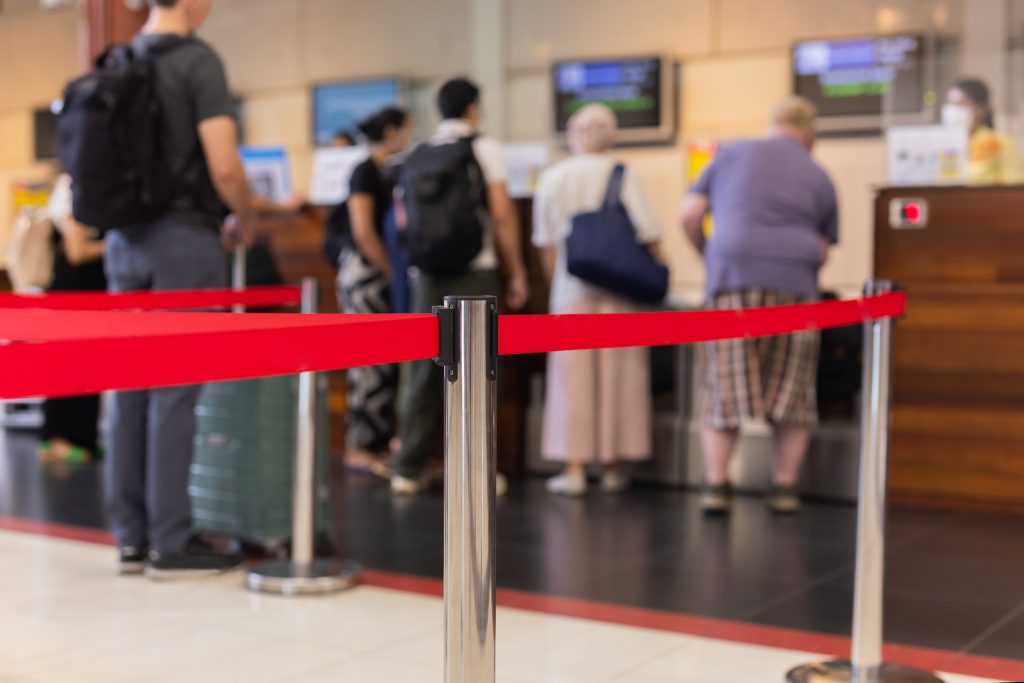
A slow registration desk can quickly turn into a queue.
23. Digital check-in can reduce average wait times by 75% compared with traditional paper-based processes. Dreamcast published benchmark data.
For large events, even a small reduction in processing time can improve attendee movement.
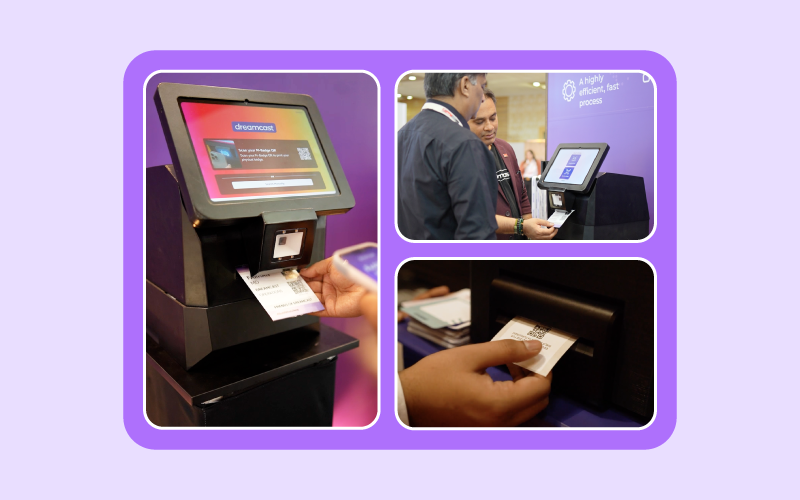
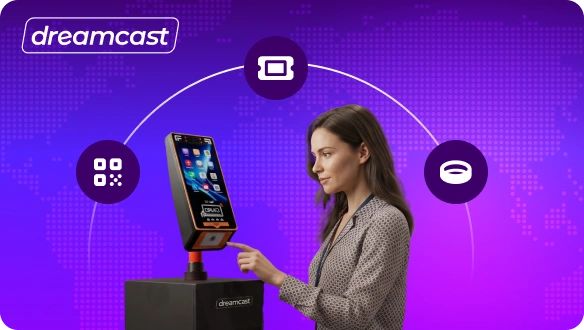
24. Dreamcast self-service kiosks can process approximately 180–200 attendees per hour per station. Dreamcast published benchmark data.
Self-service registration can help organizers manage peak arrival periods without relying entirely on staffed counters.
25. Staffed check-in desks process approximately 60–80 attendees per hour in Dreamcast’s published benchmark comparison.
This highlights why organizers are increasingly considering a mix of self-service and staffed registration options.
26. Dreamcast’s badge kiosk can print a personalized badge in under 10 seconds.
On-demand badge printing can be useful when attendees register late or need a replacement badge onsite.
27. At JLF 2026, Dreamcast reduced manual registration counters from 16 to 4 using self-service technology.
This shows how event technology can reduce dependence on traditional registration counters at high-footfall events.
What Do Large-Scale Event Registration Statistics Show?
As attendee numbers increase, registration becomes an operational challenge rather than a simple sign-up process.
28. India Mobile Congress 2025 managed more than 147,000 attendees over four days, 400+ exhibitors and partners from 101+ countries, including 465+ technology startups. The event covered more than 39,000 square metres of venue space.
- Events at this scale require registration and access systems designed to handle significant attendee volumes.
- Exhibitor registration and access management can add another layer of operational complexity.
- International events may need to manage different attendee categories and access requirements.
- Large events often need to manage several stakeholder groups through a connected registration ecosystem.
- Venue size can influence the planning of registration points, entry routes, and attendee movement.
29. CES 2026 welcomed more than 148,000 attendees. More than 55,000 CES 2026 attendees were international visitors.
At this scale, event registration needs to support a very high volume of attendees while maintaining a clear view of who has registered and arrived.
This means approximately 37% of the event’s attendees came from outside the United States, making attendee data, registration categories, and access planning increasingly important for a global event.
30. CES 2026 featured more than 4,100 exhibitors across 2.6 million+ net square feet of exhibit space.
The statistic highlights how registration and access systems must scale not only for attendees but also for exhibitors, partners, and event personnel across a large venue footprint.
31. The 2026 CEIR Index tracks B2B exhibitions across 14 distinct industry sectors.
This shows why there is no single registration benchmark that works for every event. Organizers need to compare attendance and participation data against the type and scale of the event they actually run.
32. IAEE’s 2026 CEIR Index reported a 2.1% growth forecast for the overall exhibition industry in 2026.
As exhibition activity continues to grow, registration systems will need to support increasing attendee and exhibitor participation without creating additional manual work for event teams.
What Do Attendee Category and Onsite Access Statistics Reveal?
Large events rarely have just one type of attendee. The latest event data shows why organizers need to think about attendee categories and onsite registration as separate operational considerations.
33. More than 55% of CES 2026 attendees were senior-level executives.
For business events, attendee category data can help organizers understand who is actually attending and plan networking, access, and event experiences accordingly.
34. Event registration was the most widely used event technology in the 2024 Community Brands Event Trends Study, with 41% of event planners reporting its use.
This reinforces the importance of registration technology as a core part of event operations rather than an optional add-on.
35. On the peak festival day, each turnstile recorded nearly 587 face scans in a single hour.
Real-time access data can also help organizers understand attendee movement.
36. The five turnstiles processed close to 3,000 attendees within 60 minutes.
This shows the importance of matching access technology with expected attendee volumes.
37. 95% of attendees said they trusted brands more after attending an in-person event.
The onsite experience can therefore influence how attendees perceive the event and the organizations involved.
38. 96% of attendees expressed positive feelings after attending an in-person event.
A smooth onsite journey can contribute to a more positive overall event experience.

End Notes
The latest event registration statistics reveal a clear shift in how organizers need to plan events in 2026.
Attendees are registering closer to event dates, with a significant share waiting until the final weeks or even arriving onsite before registering. This makes flexible registration workflows and real-time attendee visibility increasingly important.
AI is also becoming a practical part of event planning. At the same time, personalization remains an area where many organizers still have room to improve.
The onsite experience is equally important.
From faster digital check-in and self-service registration to large-scale event case studies, the data show that registration technology needs to scale with attendee volumes and event complexity.
For event organizers, the biggest takeaway is simple:
Registration data is not just information collected before an event. It is the foundation for better planning, smoother check-in, and a more organized attendee experience.
If you understand these event registration statistics and use them to benchmark your own event strategy, you can make more informed decisions throughout 2026 with the help of a reliable event tech solution like Dreamcast.
FAQs
You can use registration statistics to understand attendee behaviour, plan staffing, forecast attendance, and improve online and onsite registration.
Many attendees are delaying their decision until they have more clarity about the event. You should therefore prepare for late registrations instead of relying only on early registration numbers.
You should track registration timing, attendee categories, attendance volume, late registrations, and check-in patterns to make better event planning decisions.
You should choose a registration and check-in solution that can support my expected attendee volume, manage multiple categories, and provide real-time visibility into registration and onsite operations.
You should consider self-service check-in when you expect high attendee volumes, late registrations, or peak arrival periods that could create long queues at staffed registration desks.
You can collect relevant attendee preferences during registration and use the data to recommend sessions, support networking, and create a more relevant event journey.