
- Modern event badges have evolved from single-utility name tags to multi-utility tools, allowing attendees to network, make payments, and collect goodies, while letting organisers carry out quick check-ins, capture leads, and track sessions/attendance.
- The most common technologies that make these badges smart are barcodes, QR codes, and RFID. All have their pros and cons.
- For enterprise or large-scale events, RFID badges have been proven as the most potent option.
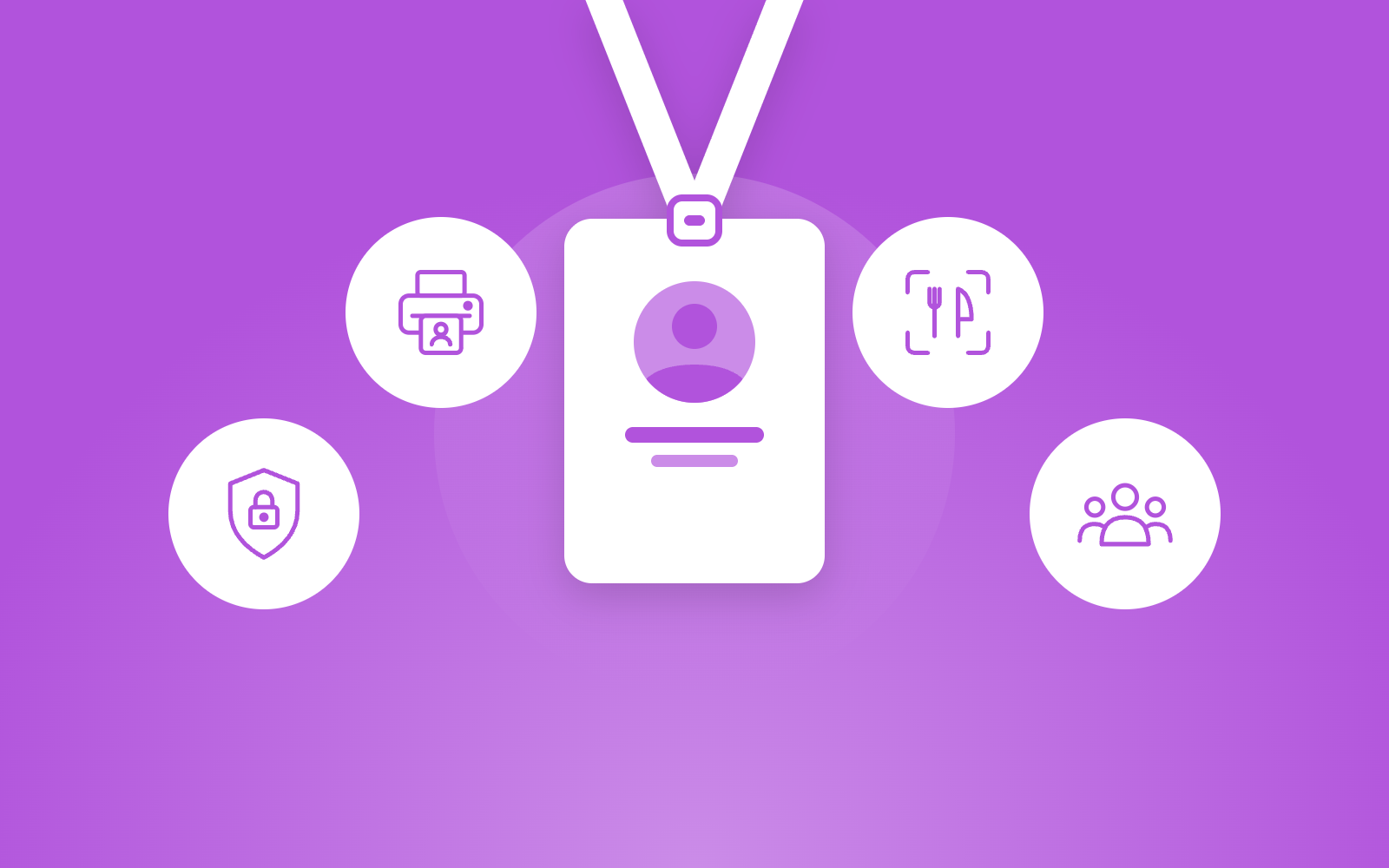
Modern event badges are no longer just passive name tags. They are dynamic, tech-enabled credentials that bridge physical attendee movement with digital event management software. For organisers, a single smart badge automates session tracking, on-site check-ins, and exhibitor lead retrieval. For attendees, it serves as a secure gateway for contactless payments, instant peer-to-peer networking, and goodie collection.
From traditional printed QR codes to advanced RFID ecosystems, implementing an all-in-one badge system completely reshapes corporate conferences, trade shows, and large-scale festivals. Here is a detailed discussion of how smart badge technology works and exactly what a single badge can do.
Table of Contents
What Is A Smart Event Badge And How Does It Work?
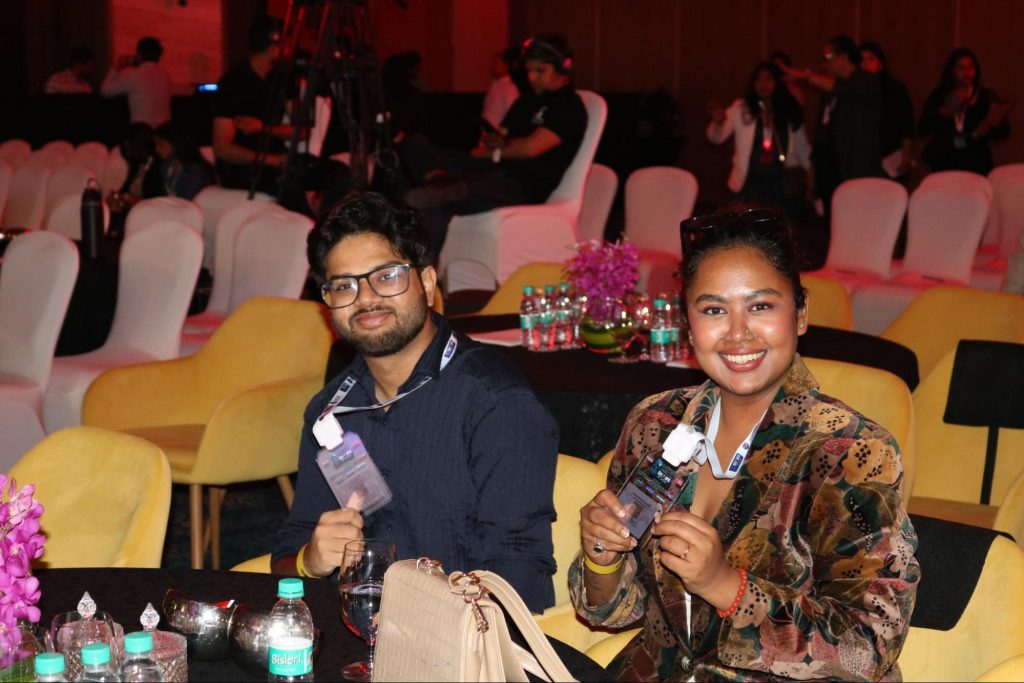
Think of a smart event badge as an all-in-one digital pass rather than just a basic plastic name tag. It is either a physical card or a digital ticket on your phone that contains a unique code, such as a QR code or an RFID chip. This code links directly to the event platform, turning a simple piece of paper into a powerful tool that connects everything an attendee does on-site.
1. Attendee Identification
It clearly displays a person’s name and company on the outside, while storing a secure digital token inside to instantly verify their registration at entry.
2. Enhancing Brand Visibility
The physical card can be customised for sponsor logos and event themes, giving your partners enhanced visibility throughout the venue.
3. Peer-To-Peer Networking
Attendees can easily swap contact information by scanning the code on each other’s badges.
4. Contactless Payments
The badge can link to a secure digital wallet, letting guests buy food, drinks, or merchandise.
5. Lead Capturing
Sponsors and exhibitors can use a smartphone app to scan a visitor’s badge, automatically gathering their contact info and adding them to their sales pipeline.
6. Data Collection Tool
Digital badges track session attendance, booth visits, and engagement patterns throughout the venue. This valuable data gives you the exact insights you need to measure and calculate your overall event ROI.
7. Event Access Control
Staff or automated gates can scan the badge to see who is allowed into specific areas, making it simple to manage VIP zones and track session attendance.
8. Goodie Bag And Entitlement Collection
Staff or a gate scans the badge, the system marks it as redeemed, and duplicate collection is blocked. This works for goodie bags, lunch access, coupon redemption, delegate kits, etc. For tier-based distributions, the right entitlement shows up automatically at the collection point.
The Technology Options Powering Modern Event Badges
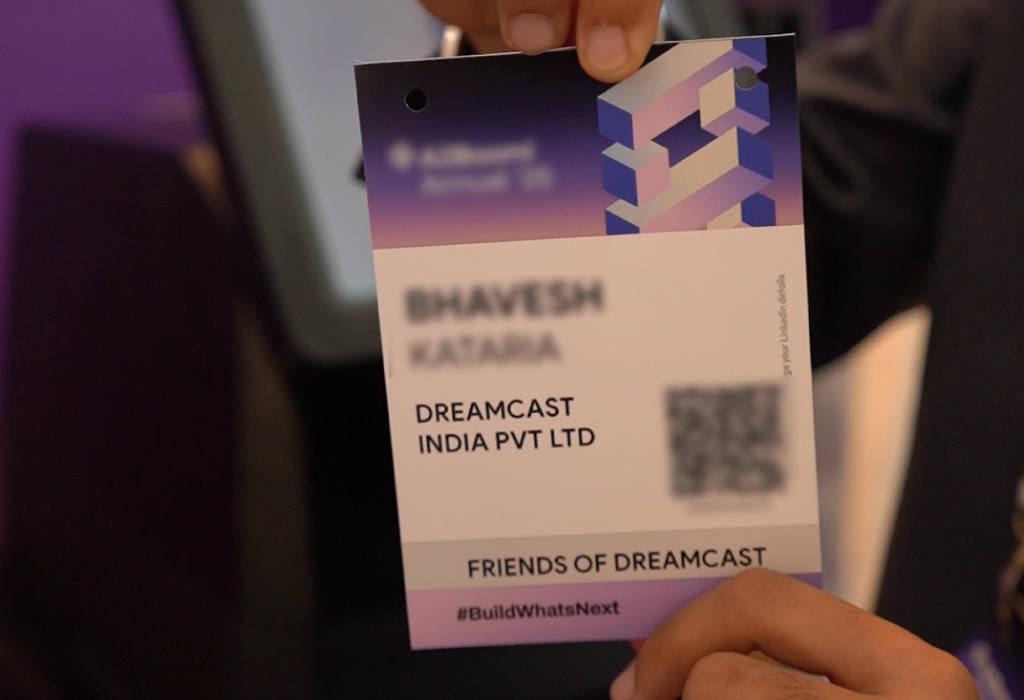
Smart badges rely on different types of tracking and data technology to match the scale, budget, and flow of your event. Here are the most common technology options used to power modern event badges:
| Badge Technology | Setup Cost | Scanning Method | Best Use Case |
| Barcode | Low | Direct line-of-sight laser scan | Basic access control on a tight budget |
| QR Code | Low to Moderate | Any-angle scan via phone or kiosk | Speeding up check-in, lead capture, and easy digital networking |
| RFID | High | Passive walk-through (no tap required) | Real-time crowd tracking, heat mapping, and hands-free entry |
| Facial Recognition | High | Biometric facial scan at kiosks | Ultra-fast, premium VIP arrivals and secure identity verification |
Detailed Overview of These Technologies
1. Barcode Badges
The traditional standard for event access. Barcodes contain one-dimensional data strings that must be read sequentially by a laser scanner. While reliable for basic entry control and keeping hardware costs low, they require precise linear alignment to scan, which can slow down large registration lines.
2. QR Code Badges
The most versatile and accessible upgrade for modern events. Quick Response (QR) codes hold significantly more data than traditional barcodes and can be scanned from almost any angle using a smartphone or tablet camera. They function perfectly on both printed badges and digital tickets, making them the ideal choice for quick self-service check-ins, instant peer-to-peer networking, and easy exhibitor lead retrieval.
3. RFID and NFC Badges
These badges feature small, embedded chips and internal antennas. Instead of using a visual scan, they use radio frequencies to communicate with readers. Near Field Communication (NFC) badges require a close-range tap to perform tasks such as making secure cashless payments or checking into specific workshops. Radio Frequency Identification (RFID) badges offer passive tracking, allowing organisers to monitor crowd density, map attendance patterns, and track booth dwell times as attendees simply walk past long-range sensors.
4. Facial Recognition (FR) Tech
The cutting edge of secure, hands-free event entry. While not embedded into the physical badge itself, facial recognition software works alongside your badge ecosystem at check-in kiosks. Attendees who opt in can scan their faces at entry points to instantly verify their registration and print their badges, creating a completely biometric, queue-free arrival experience.
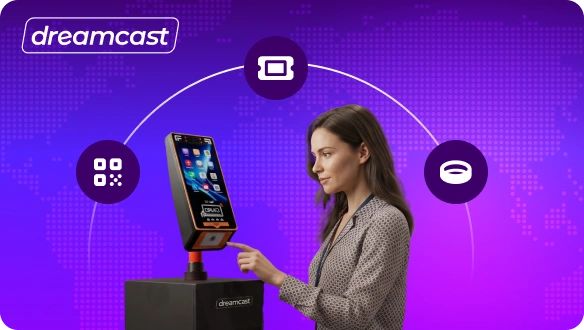
Watch how Dreamcast’s self-service badge kiosk, the Fastest Indian, enables 10-second badge printing at event check-ins using facial recognition and QR-code scanning.
While smart badges can handle a wide variety of fun event perks like scanning for a goodie bag or checking in for a lunch buffet, their true power lies in solving the three biggest challenges every planner faces: financial tracking, attendee logistics, and stakeholder ROI. Let’s look at how a single badge masters these core pillars, starting with cashless payments.
Read More: RFID vs NFC vs QR Code vs Bluetooth: Best Event Badge Technology in 2026
How Is Badge Printing Managed On The Ground?
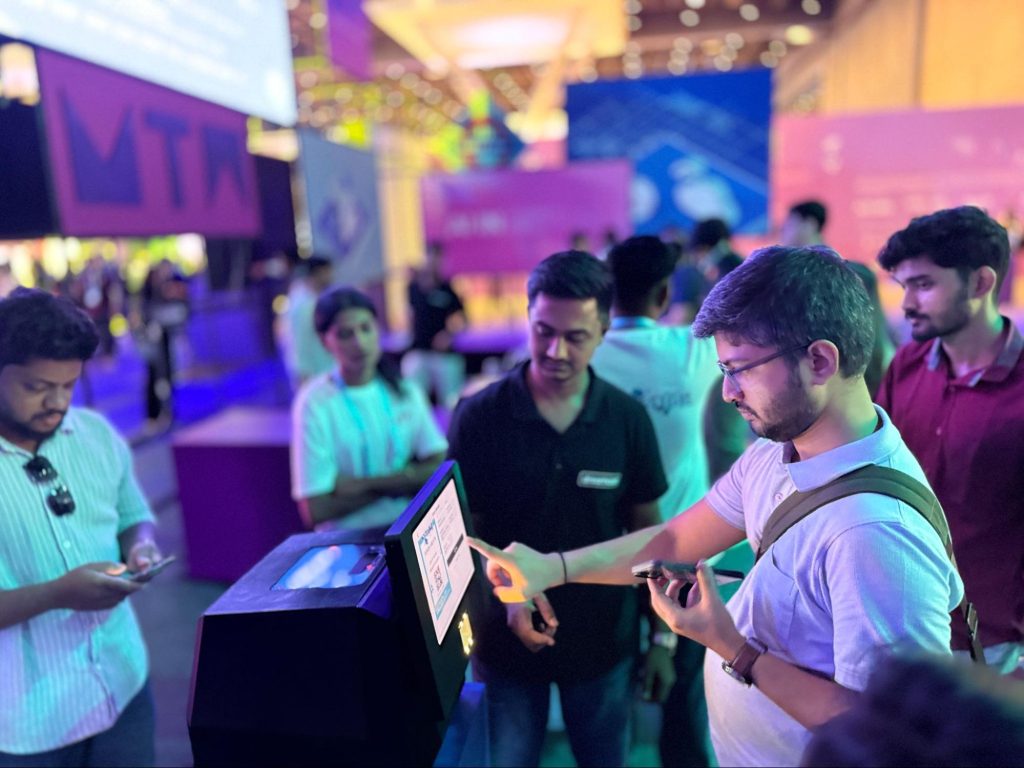
On-site badge printing is one of the most pressure-heavy moments of any event. Hundreds of attendees arrive at once, details change overnight, and walk-ins show up with no pre-printed credentials waiting for them. Traditional bulk pre-printing solves none of these problems. It just moves them earlier in the timeline.
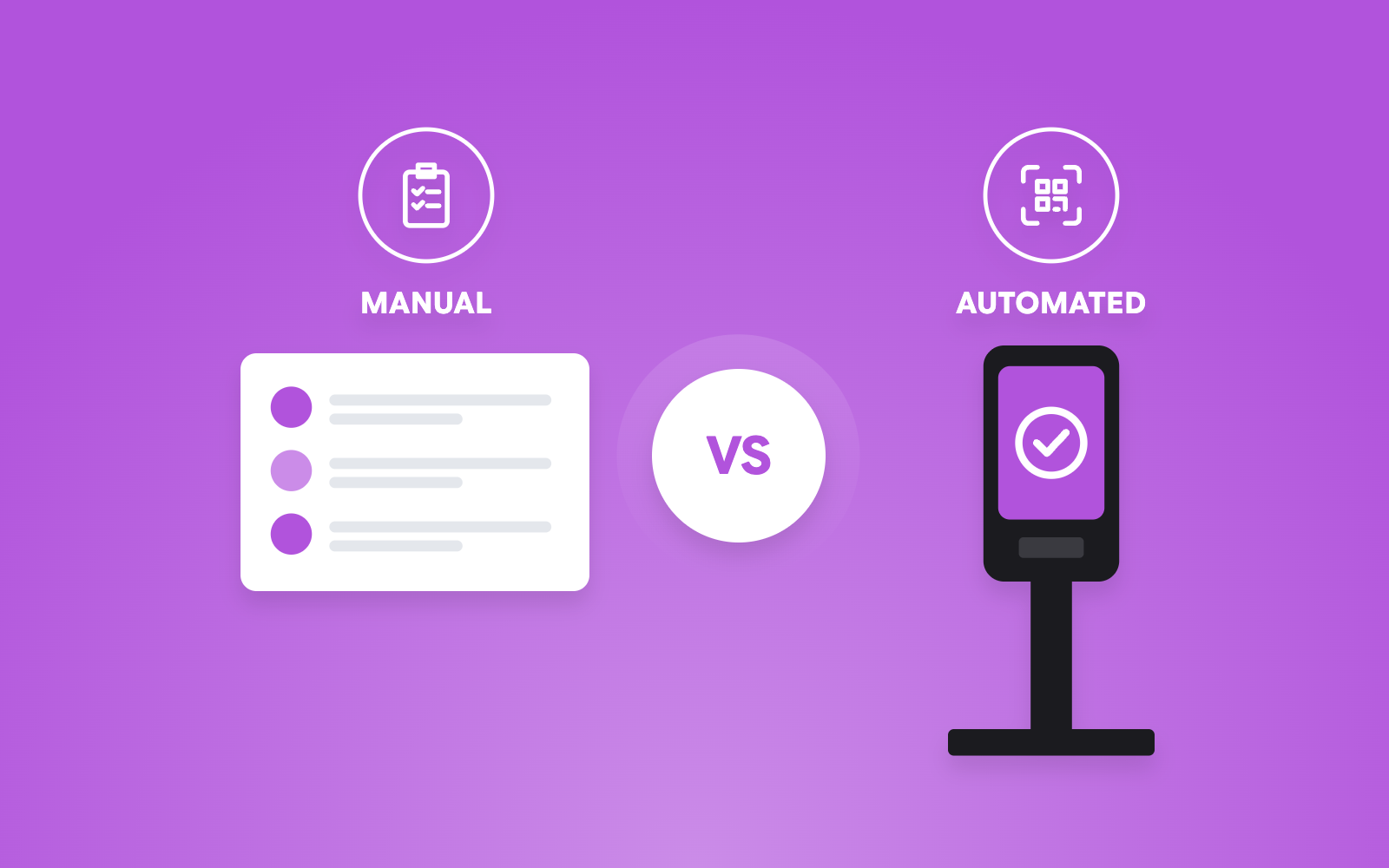
Modern on-demand badge printing handles all of it at the point of arrival. The attendee walks up to a self-serve kiosk, verifies their identity through a QR code scan or facial recognition, confirms their details on screen, and collects a freshly printed, personalised badge. The entire process takes under 10 seconds.
It’s worth noting that self-service is no longer a differentiator at events. It is becoming the basic expectation. Attendees are increasingly conditioned by kiosk-first experiences across airports, retail, and hospitality, and they bring those expectations to event check-in. Organisers who still rely on manual registration desks are not just slower; they are out of step with how people expect to interact with any service environment in 2025 and beyond. This is backed by data.
The self-service kiosk market is on track to nearly double, from $34.4 billion in 2024 to $62.5 billion by 2030. (Source: Grand View Research, Self-service Kiosk Market Size, Share & Industry Report, 2030)
Dreamcast’s Badge Kiosk, the Fastest Indian, built specifically for high-footfall events, runs this process without staff involvement at each station. It pulls attendee data from a live synced database, supports walk-in registration on the spot, and prints badges with custom branding, sponsor logos, and QR codes in a single step.
The result is faster crowd flow, fewer errors, and a stronger first impression at the moment that sets the tone for everything that follows.
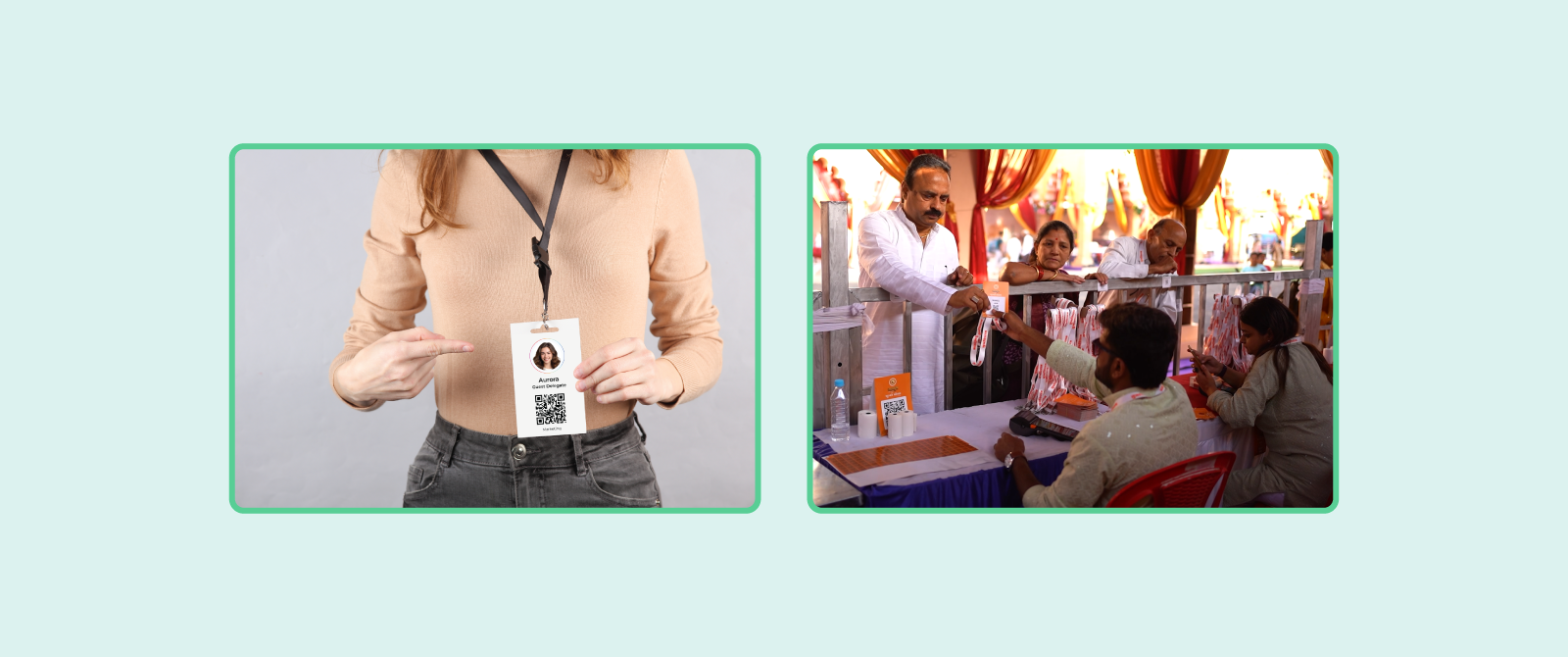
At the Mumbai Tech Week 2026, watch how the Dreamcast badge kiosk checked in 20,000+ attendees, under 5 seconds each. Attendees called the badging process smooth and surprisingly quick.
Also Check: Pre-Printed vs On-Demand Badges: Which Should Event Organizers Choose?
How Can A Single Badge Handle Contactless Event Payments?
A smart event badge handles contactless payments by linking to a digital wallet that works at every vendor point across the venue. Attendees tap their badge to pay for food, merchandise, or services in under two seconds, eliminating cash handling and card terminal delays.
The payment link is established before or at check-in. Attendees either pre-load credit through an online portal ahead of the event, top up at an on-site kiosk on arrival, or connect their badge directly to an existing payment method. Every transaction across every vendor runs through that single credential.
Attendees arrive at events already conditioned to pay without cash. In 2024, 85% of point-of-sale transactions globally were cashless. (Source: CoinLaw, Cashless Economy Statistics 2026: Digital Payment Surge)
At events, a badge-linked wallet extends that same expectation across every vendor, bar, and merchandise point in the venue.
Key benefits for organisers:
- Real-time financial visibility across every vendor, with no end-of-day cash reconciliation
- Spending pattern data by booth, time window, and transaction type for post-event analysis
- Instant badge deactivation and balance transfer if a credential is lost or stolen
- Reduced cash handling infrastructure, including no change floats and no distributed cash collection
Key benefits for attendees:
- One badge covers every purchase, with no need to carry cash or estimate spend in advance
- Faster service at every point of sale with no chip reader delays or change-counting
- Any pre-loaded credit that goes unspent is typically refundable after the event
At the Jaipur Literature Festival 2026, Dreamcast brought in its RFID-powered Cashless payment system that reduced queues, increased transaction speed, and created a smoother event experience for a footfall exceeding 3,00,000+ attendees. See how.
Can Event Badges Automate Session Tracking And Access Control?
Yes. Smart event badges automate session tracking and access control by pairing each scan with a centralised event platform that logs attendance and enforces permissions in real time. QR badges handle this well at most conferences and corporate events. RFID is the right upgrade when footfall is high, zones are multiple, or stopping at a reader is not operationally viable.
QR vs. RFID for session tracking and access control: what is the actual difference?
| Factor | QR Code Badge | RFID Badge |
| Check-in method | Attendee presents badge; staff or kiosk scans it | Passive read as the attendee walks through a fixed reader |
| Speed at entry | Moderate: the attendee must stop and present | Fast, no stopping or active presentation required |
| Best for | Conferences, corporate events, seminars | Large expos, festivals, high-footfall multi-zone events |
| Security | Functional, but QR codes can be screenshotted and forwarded | Stronger credentials are encrypted and harder to duplicate |
| Infrastructure cost | Low, works on any smartphone or kiosk camera | Higher requires a fixed reader installation at each entry point |
For most corporate conferences and seminars, QR badge scanning at session doors is accurate, cost-effective, and sufficient. A staff member or kiosk scans the badge as each attendee enters, the platform logs attendance instantly, and capacity is tracked without a clipboard in sight.
For large expos or festivals managing thousands of simultaneous movements across multiple zones, passive RFID removes the need for attendees to pause at a reader entirely, which matters when hundreds of people are transitioning between sessions at the same time.
Key benefits for organisers:
- Live attendance figures per session on a central dashboard, updated as the event runs
- Multi-tier access control across VIP areas, speaker rooms, sponsor lounges, and restricted breakouts from a single interface
- Automatic capacity enforcement at entry points, removing the need for dedicated door staff
- Post-event session data showing which topics drove the deepest engagement, informing future content and sponsorship decisions
Key benefits for attendees:
- Faster session entry with no manual sign-in and no queue at a staffed desk
- Accurate automatic attendance records for sessions requiring proof of participation.
- Consistent access enforcement across all event zones, applied at the point of entry
Also Read: QR Codes vs RFID Badges for Events: Key Differences Explained
How Do Tech-Enabled Badges Improve Exhibitor Lead Retrieval And Networking?
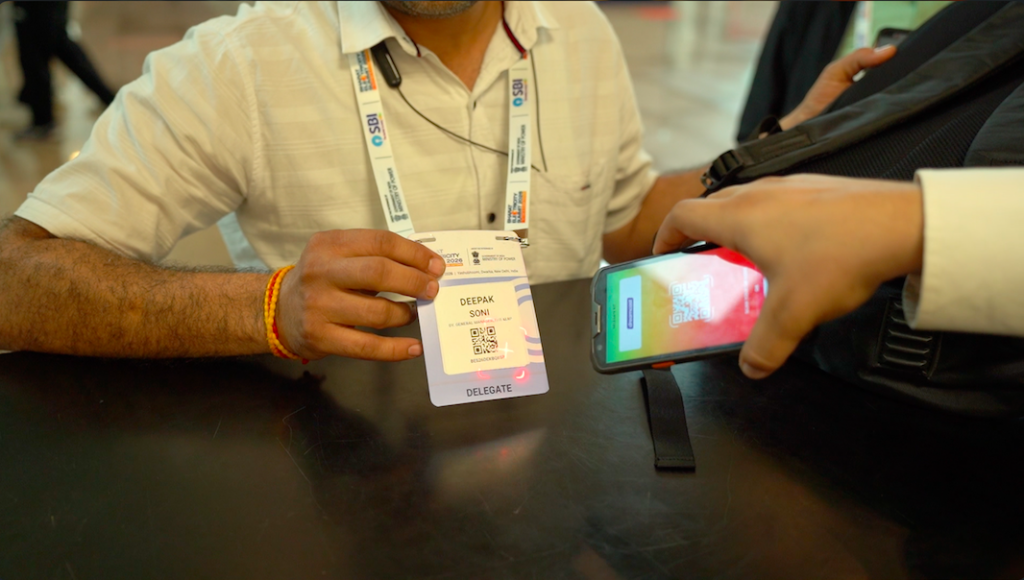
Tech-enabled badges replace the business card exchange with a verified scan that pulls structured contact data directly from the event’s registration database. For lead retrieval and peer-to-peer networking, QR is the practical standard at most events. It works on any smartphone, requires no additional hardware, and delivers the same contact data quality as RFID at a fraction of the infrastructure cost.
QR vs. RFID for lead capture and networking: what is the actual difference?
| Factor | QR Code Badge | RFID Badge |
| Scan method | Exhibitor scans badge with smartphone camera via event app | Requires a dedicated RFID reader at the booth |
| Data captured | Full registration record, instantly | Full registration record, instantly |
| Attendee-to-attendee networking | Mutual scan via mobile event app, no extra hardware | Same outcome, but adds hardware dependency with no data advantage |
| CRM sync | Real-time via lead capture app | Real-time via an integrated platform |
| Practical cost | Low, works on any smartphone | Higher hardware cost, no lead quality advantage over QR |
| Best for | Conferences, trade shows, and expos of all sizes | No distinct advantage over QR for this specific use case |
An exhibitor opens the event app, scans the attendee’s QR badge, and the contact record pulls through immediately from the registration database. They can add a lead rating, qualifying notes, or a follow-up flag before the conversation ends, and the data syncs to their CRM while still on the floor.
For attendee-to-attendee networking, the same scan via a mobile event app gives both parties a complete, accurate contact record without either person typing anything.
Key benefits for organisers:
- A standardised lead capture process across all exhibitors, making post-event ROI reporting consistent and comparable
- Quantifiable sponsor value through scan volumes, lead counts, and session-linked engagement data
- Higher exhibitor satisfaction from a process that reduces admin and keeps the focus on meaningful conversations
Key benefits for attendees:
- Instant, accurate contact exchange with no manual typing required from either party
- A structured, exportable contact record that does not rely on legible handwriting or recalled details
- Role and interest data visible on the badge surfaces relevant connections before a conversation even begins
Conclusion
A single event badge has moved well past identification. It now manages every touchpoint an attendee encounters, from the moment they check in to the last session they attend, the lunch they collect, and the contacts they leave with. For organisers, that means fewer manual processes, cleaner data, and sponsor ROI that is measurable rather than assumed. For attendees, it means less friction at every step.
The technology behind the badge, whether QR, RFID, or a combination of both, matters less than how well it is integrated into a unified event platform. When the integration is right, the badge does not just identify who is in the room. It tells you exactly what happened while they were there.
FAQs
A smart event badge is a physical card or digital ticket that connects an attendee’s profile to a central event platform. It uses an embedded code, like a QR code or microchip, which staff or vendors scan to instantly track attendance, exchange contact data, or process payments throughout the venue.
Yes. A single badge acts as a multi-use pass. Staff scans the badge at doorways to log session attendance automatically, while attendees can scan each other’s unique badge codes to swap business profiles digitally inside the official event app, entirely replacing traditional paper business cards.
Contactless badges function as secure digital wallets. Attendees link a payment method or load funds onto their event profile beforehand. At the venue, vendors simply scan the badge’s QR code or tap its chip using a mobile device to deduct funds instantly from the attendee’s balance.
NFC event badges contain a tiny embedded chip that transmits data over very short distances. When a visitor enters an exhibition booth, the vendor simply taps the attendee’s badge with a smartphone app to instantly capture their contact information and log them as a qualified sales lead.
Organisers can collect real-time data on overall venue arrival times, individual session attendance, specific booth visit durations, and crowd density patterns. This information helps planners measure exact session popularity, track vendor engagement, and calculate the comprehensive return on investment of the event.
Yes, they are highly secure. Enterprise event platforms do not store personal banking information or credit card numbers on the badge itself. Instead, the badge holds an encrypted digital token that only the organiser’s secure cloud database can read and authorise to complete transactions.