



Table of Contents
1. In-person events continue to deliver the highest ROI for brand awareness, networking, and lead generation.
2. AI is transforming event marketing, helping organizers personalize attendee experiences, automate planning, and improve engagement.
3. Interactive sessions outperform traditional presentations, making workshops, networking, and live Q&As essential for modern events.
4. Hybrid events remain valuable for extending reach and engaging remote audiences when supported by the right technology.
5. Fast, contactless check-ins and smart event solutions are becoming the new standard for improving attendee experience.
6. Measuring event success goes beyond attendance. Tracking engagement, qualified leads, and ROI is now just as important as registration numbers.
Table of Contents
Introduction
Live events have evolved far beyond being a way for businesses to reconnect after the pandemic. Today, they play a much bigger role in helping brands build awareness, engage their audience, generate quality leads, and drive business growth. At the same time, hybrid experiences and smart event technology have become an essential part of delivering successful events.
Businesses are no longer debating whether event marketing is worth the investment. Instead, they’re looking for ways to get the most value from every event they organize. From making better use of event spaces to creating engaging digital experiences, the focus is now on maximizing return on investment (ROI) at every stage of the attendee journey.
Whether you’re planning a large-scale conference, a regional roadshow, a trade show, or an industry webinar, making informed decisions starts with understanding what the data says.
In this blog, we’ve rounded up the latest event marketing statistics, trends, and benchmarks for 2026-27. You will find verified industry data, categorized statistics, and practical insights to help you plan more successful events.
Event Marketing Statistics
The event industry is constantly evolving, and keeping up with the latest numbers can help you make smarter marketing decisions. Whether you’re planning budgets, investing in new event technology, or setting performance goals, these statistics offer a clear picture of where the industry is headed.
Let’s take a closer look at event marketing statistics across different categories, or if you want to read about 12 Event Marketing Mistakes Hurting Registrations(How to Avoid Them), then you can read them here.
General Event Marketing & Budget Allocation Statistics
In-person events continue to be one of the most effective ways for businesses to connect with their audience, build stronger relationships, and generate high-quality leads. As companies see better business outcomes from live experiences, many are increasing their investment in event marketing despite ongoing economic challenges.
1. High Industry Optimism
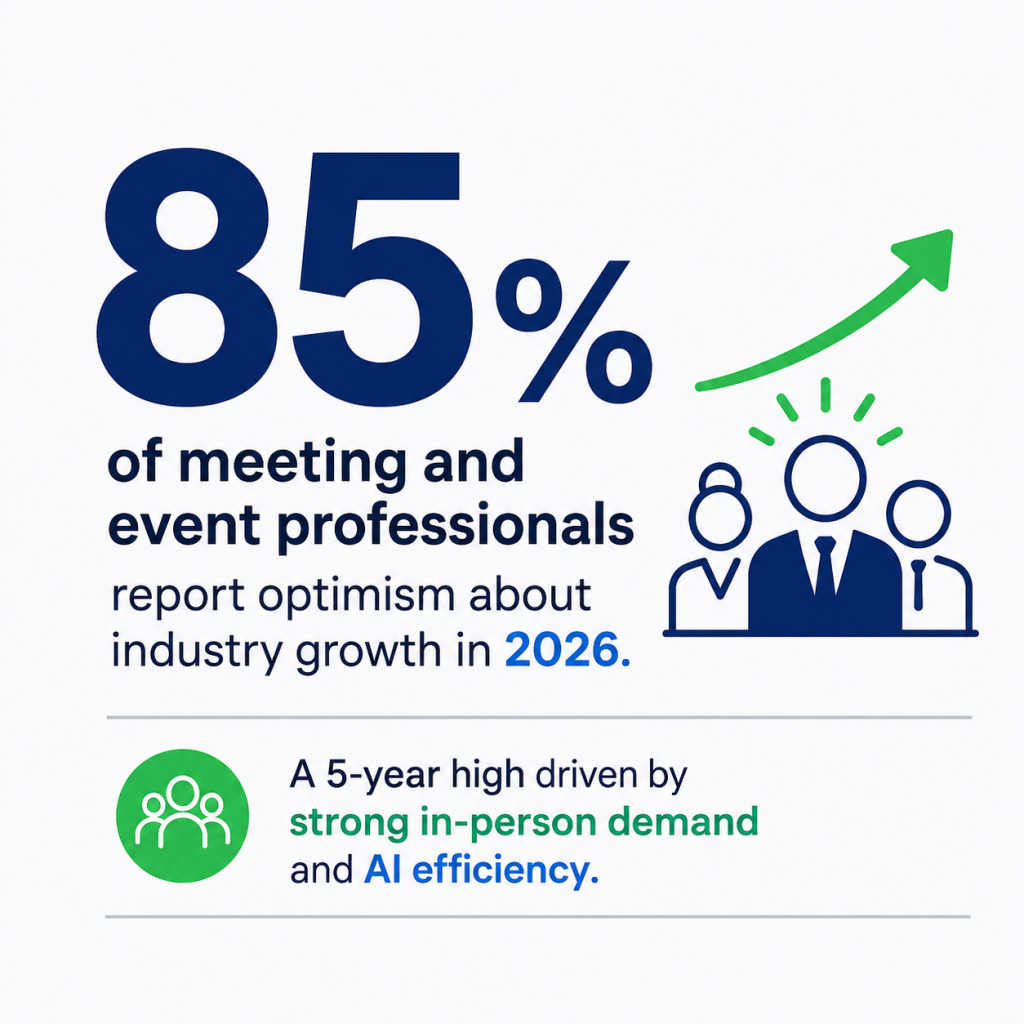
The meetings and events industry is entering 2026 with strong confidence. Around 85% of event and meeting professionals are optimistic about the industry’s growth, marking the highest level of optimism recorded since 2021.
2. Top Distribution Channel
Live events continue to outperform most marketing channels for B2B organizations. According to the Content Marketing Institute, 52% of B2B marketers consider in-person events their most effective distribution channel. This puts them ahead of webinars (51%), social media (42%), and corporate blogs (41%) when it comes to achieving marketing goals.
3. Budget Expansion
Companies are also increasing their marketing investments. Research shows that 61% of B2B enterprise marketers expect their overall marketing budgets to grow, while 33% are specifically allocating more budget to events and experiential marketing. This highlights the growing confidence businesses have in events as a revenue-generating channel.
4. Cost Management as a Primary Challenge
While budgets are increasing, managing costs remains a major concern. Around 38% of event planners say rising inflation and venue expenses are their biggest operational challenge. Economic uncertainty (32%) and budget reductions (30%) also continue to affect event planning decisions.
5. Rising Cost Per Attendee
Higher venue rental costs, increased labor expenses, and rising food and beverage prices are all contributing to increased event costs. As a result, 71% of event organizers expect their average cost per attendee to rise over the coming year.
Event Technology & AI Adoption Statistics
Technology has become a key part of modern event planning, and AI is no longer just an emerging trend. Today, event organizers are using intelligent tools to simplify operations, improve attendee experiences, and make better use of event data.
6. AI for Event Planning
50% of event planners utilize AI tools for agenda building and concept ideation, while 40% use AI-driven mobile event apps featuring personalized schedules.
7. Smart Matchmaking & Networking
Networking has always been one of the biggest reasons people attend events. To make these interactions more meaningful, 35% of organizers now use AI-powered matchmaking tools that connect attendees with relevant peers, exhibitors, sponsors, and potential business partners based on shared interests and goals.
8. AI Governance in Enterprises
28% of enterprise organizations have updated formal event guidelines to address AI data privacy, attendee consent, and security governance.
9. On-Site Queue Reduction
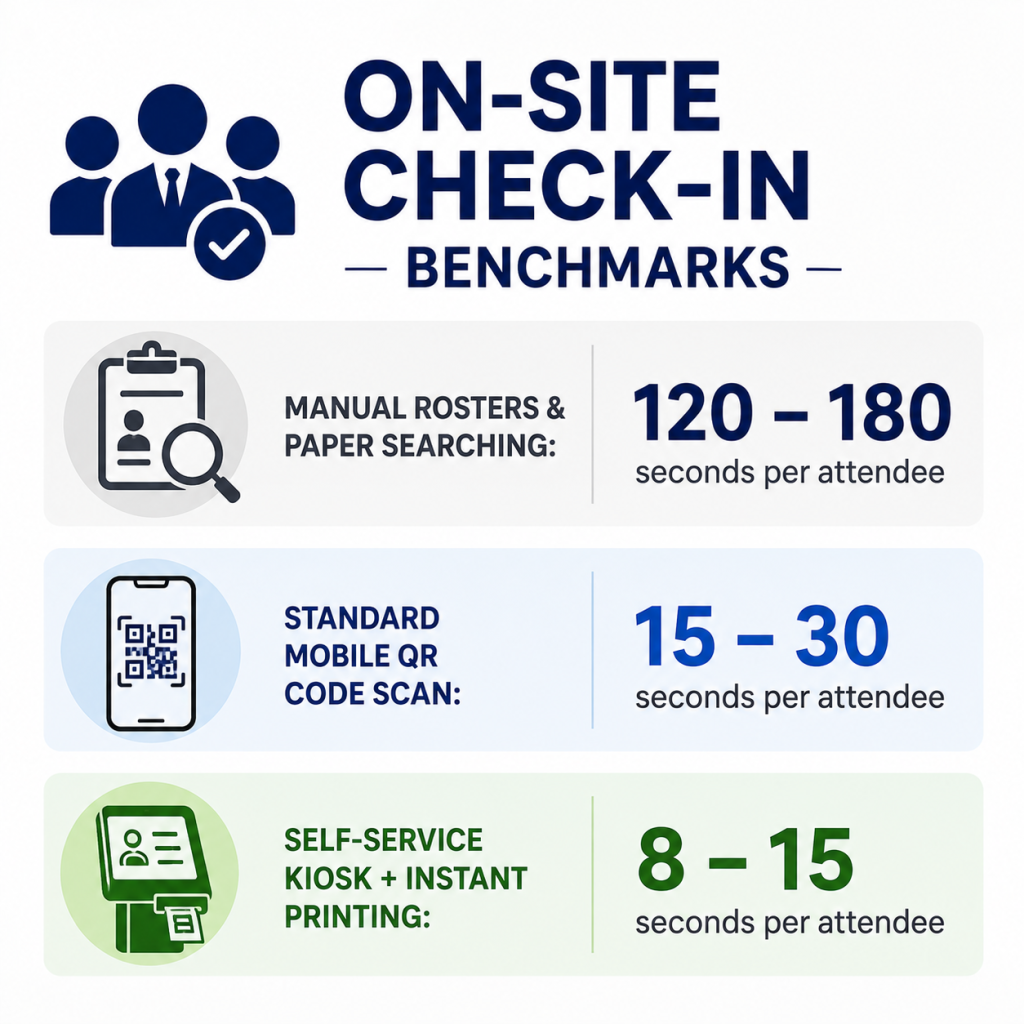
According to Dreamcast’s internal event management benchmarks, using self-service registration kiosks and instant QR code badge printing can reduce average check-in wait times by 78% compared to traditional manual registration methods. Faster check-ins not only improve the attendee experience but also help event teams manage large crowds more efficiently.
This is exactly what happened at the Big Billion Property Sale 2026. Dreamcast helped them manage attendee registrations for a large-scale real estate exhibition, which presented several operational challenges by providing online event registration, QR code-based on-spot registration, turnstile-based access management, and a real-time registration dashboard. Read more about it here:
Attendee Engagement & Experience Statistics
Today’s audiences no longer want to sit passively through hours of traditional PowerPoint presentations. The modern event attendee demands active participation, networking, and tangible takeaway value.
| Engagement Preference | Demand Growth vs. Previous Years | Primary Driver |
| Interactive Workshops & Breakouts | +42% | Peer-to-peer learning & problem-solving |
| Structured Socializing & Networking | +40% | High demand for face-to-face connection |
| Visible On-Site Sustainability Actions | +40% | Corporate ESG goals & attendee values |
| Hyper-Personalized Content Tracks | +37% | Tailored learning paths based on role/industry |
| Regional / Micro-Community Sessions | +34% | Travel cost reduction & hyper-local relevance |
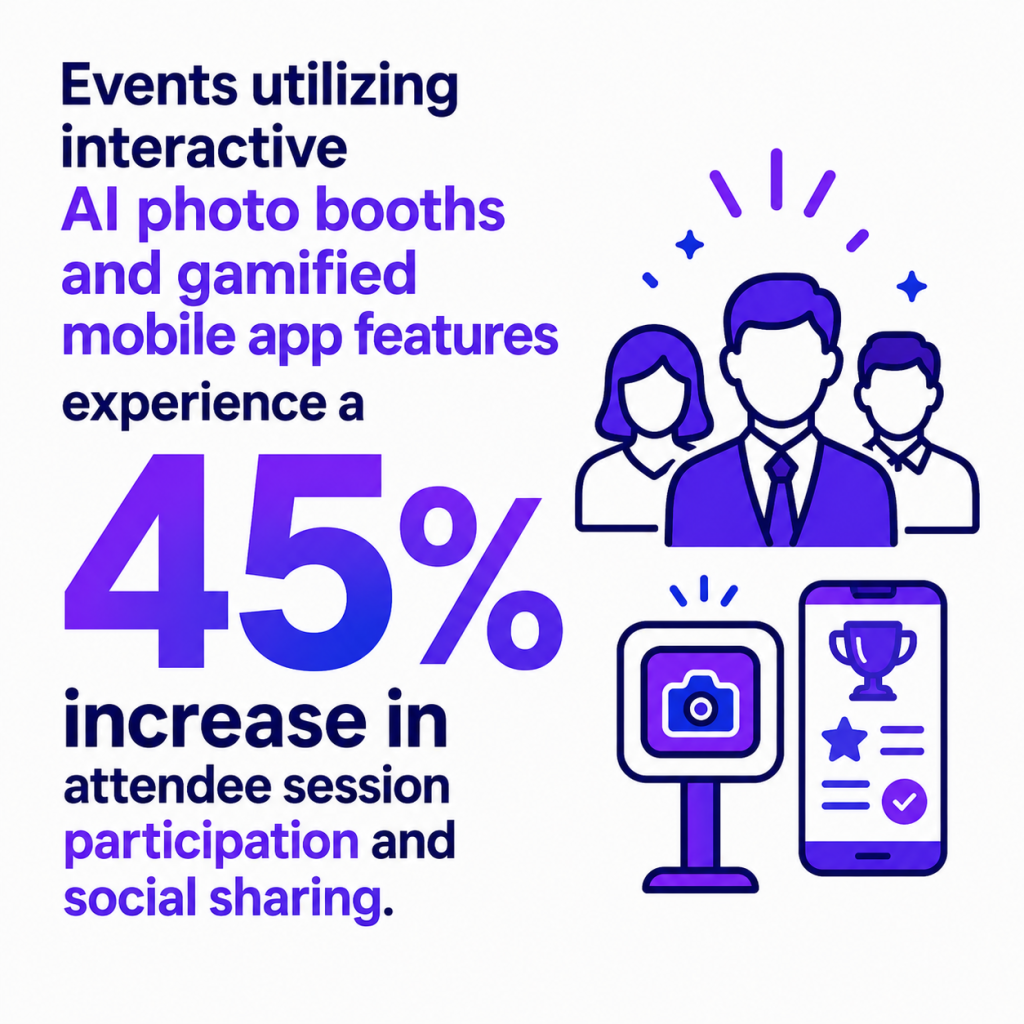
10. Interactive Formats
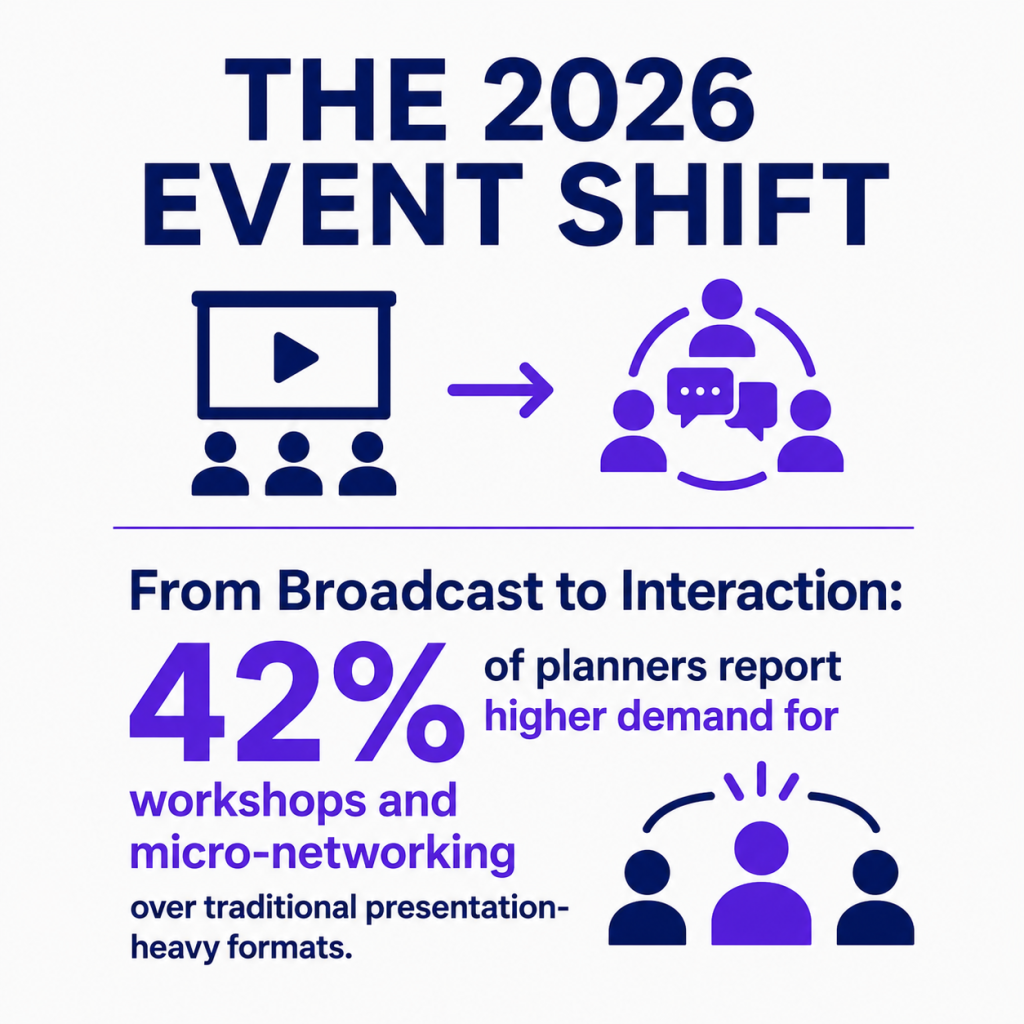
Demand for interactive workshops, roundtables, and hands-on masterclasses has grown by 42% over five-year baselines. The result is that they are replacing long keynote marathons.
11. Gamified On-Site Experience
Event apps including live audience polling, Q&A, and gamification features report an average attendee satisfaction rating 28% higher than events relying solely on printed agendas or passive broadcasts.
In-Person, Hybrid & Virtual Event Statistics
While physical gatherings represent the gold standard for high-intent business conversion, virtual and hybrid delivery models remain vital for global reach and digital lead generation.
12. In-Person Primacy
88% of total enterprise event spend is dedicated to in-person gatherings, reflecting the unmatched capacity of face-to-face interaction for building trust.
13. Webinar Effectiveness
51% of B2B marketers continue to rate webinars as a top-tier lead generation channel, making them the leading digital-only format for mid-funnel content distribution.
14. Hybrid Retention Metrics:
According to Dreamcast, hybrid event analytics, multi-stream setups with integrated digital chat, live polling, and real-time remote Q&A achieve a 62% higher retention rate for remote audiences compared to standard one-way video broadcasts.
Also Read: Event Content Creation: A Powerful Tool For B2B Event Marketing
Event ROI, Lead Capture & Revenue Statistics
Attribution is always top of mind for Chief Marketing Officers (CMOs). Event teams are expected to prove clear ties between event participation and closed-won pipeline.
15. Pipeline Influence
Enterprise B2B organizations attribute an average of 24% to 30% of their total annual pipeline to direct event interactions and event-driven lead nurture campaigns.
16. Data Integration Impact
Forrester’s State of B2B Events research shows that 62% of organizations with deeply integrated event tech stacks are satisfied with their ability to prove ROI, compared to just 37% of non-integrated teams.
17. Exhibitor Efficiency
Dreamcast lead retrieval data reveals that trade show exhibitors using digital badge scanning apps capture 3.5x more qualified leads than those relying on traditional business card collections or paper sign-up sheets.
Event Marketing Trends Statistics in 2026
The event industry continues to evolve as attendee expectations, technology, and business priorities change. Event organizers are no longer focused only on increasing registrations. They are investing in experiences that encourage meaningful engagement, deliver measurable results, and create long-term value.
The following trends highlight what’s shaping event marketing in 2026 and how businesses are adapting to stay ahead.
AI-Driven Personalization at Scale
The days of offering every attendee the same event experience are quickly coming to an end. Modern event platforms now use AI to recommend personalized agendas, relevant sessions, networking opportunities, and content based on each attendee’s interests and behavior.
18. 40% of enterprise events now use AI-powered mobile apps that continuously adjust attendee recommendations based on real-time behavior and session attendance.
19. Marketers using hyper-personalized content delivery during event promotion and follow-ups observe up to 40% higher conversion rates from registration to attendance.
Smooth On-Site Logistics and Smart Venues
Long lines at registration desks create immediate friction and harm brand perception. In response, organizers are investing heavily in contactless, smart event infrastructure.
20. 38% of event planners say selecting unique, technologically equipped venues is a top operational priority.
21. Implementation of self-service check-in kiosks, facial recognition entry, and instant badge printing has increased by 45% year-over-year, driven by the need to minimize on-site labor costs while accelerating entry.
Sustainability as a Selection Criteria
Sustainability is no longer an optional add-on; it is a primary factor in venue and vendor selection for global organizations.
22. 40% of event attendees explicitly demand visible sustainability practices on-site, including zero-waste catering, paperless ticketing, and carbon-offset options.
23. 30% of corporate meeting planners now mandate venue sustainability certifications (such as LEED or ISO 20121) as a non-negotiable prerequisite in RFPs.
The Rise of Regional Roadshows & Micro-Communities
To mitigate high travel costs and accommodate hybrid work policies, companies are balancing mega-conferences with distributed regional roadshows.
24. 34% of organizations report shifting a portion of their annual event budget from a single national event to a series of localized, high-touch regional gatherings.
25. Regional roadshows achieve an average attendance conversion rate of 72% (compared to 55–60% for major international conferences) due to lower travel friction for attendees.
Multi-Touch Event Analytics & Unified CRM Integration
Planners are moving away from measuring events solely by total attendee count. Modern analytics focus on engagement duration, booth dwell time, and direct integration into CRM platforms like Salesforce and HubSpot.
26. Two-thirds (66%) of B2B event organizations have fully integrated their event technology platforms into their wider marketing tech stack.
27. Organizations that sync real-time event engagement data directly into sales workflows report a 22% faster lead-to-opportunity velocity.
Event Marketing Benchmark Statistics for 2026–2027
Knowing industry benchmarks makes it much easier to evaluate your event’s performance. They help you understand whether your registration rates, attendance, lead generation, and attendee engagement are in line with industry standards or if there are areas that need improvement.
The following benchmarks provide a useful reference point for measuring the success of different event formats.
Event Format Performance Matrix
| Metric / Benchmark | Flagship In-Person Conference | B2B Trade Show / Expo | Regional Executive Roadshow | Digital Webinar | Hybrid Event Setup |
| Reg-to-Attend Rate | 65% – 75% | 70% – 80% | 75% – 85% | 40% – 50% | ** In-Person: 70% Virtual: 35%** |
| Avg Check-In Time | < 45 Seconds (with Kiosks) | < 30 Seconds (with Kiosks) | < 20 Seconds (Direct Scan) | Instant | < 45 Seconds (On-site) |
| Avg Cost Per Attendee | $800 – $1,500+ | $500 – $1,200 | $300 – $600 | $15 – $45 | $600 – $1,100 |
| Lead-to-Opp Rate | 18% – 25% | 12% – 20% | 25% – 35% | 5% – 10% | 14% – 22% |
| Sponsor Satisfaction | 82% | 78% | 88% | 65% | 74% |
Detailed Benchmark Analysis
You have seen the overview, now let us discuss this in detail.
Registration-to-Attendance Conversion Benchmarks
Getting people to register is only half the battle. The conversion rate from registration to actual attendance varies significantly by event format and ticket cost:
28. Paid In-Person Conferences: 75% – 85% show-up rate (financial commitment drastically lowers drop-off).
29. Free In-Person B2B Events: 55% – 65% show-up rate.
30. Virtual Webinars & Digital Summits: 35% – 48% show-up rate (digital events experience higher drop-off due to low friction and low entry commitment).
On-Site Operational Benchmarks
Check-in bottlenecks remain the leading cause of poor initial impressions among attendees. Industry performance benchmarks show a clear gap between legacy manual processes and modern automated setups:
Lead Generation & Pipeline Velocity Benchmarks
For B2B organizations, event success is measured by pipeline impact:
31. Average Lead Capture Volume:
Mid-sized trade show exhibitors capture 150 to 350 qualified leads per event when equipped with digital badge scanners.
32. Post-Event Follow-Up Window:
Follow-up contacts made within 48 hours of event conclusion yield a 3x higher response rate than those made after 5 business days.
33. Sales Cycle Reduction:
B2B prospects who attend an in-person product demonstration or executive roundtable progress through the sales pipeline 28% faster than non-event leads.
Event App Adoption Benchmarks
For events with 300+ attendees, mobile apps serve as the operational hub:
34. Target App Adoption Rate:
Successful B2B conferences achieve an event app download rate of 70% to 85% among registered attendees before day one.
35. In-App Engagement:
Top-performing event apps see attendees check schedules, view sponsor profiles, or use interactive maps an average of 8.4 times per day.
Actionable Takeaways for Event Marketers in 2026-27
The statistics and benchmarks above highlight one thing clearly. Successful events are no longer just about attracting attendees. They’re about creating seamless experiences, driving meaningful engagement, and delivering measurable business results. Here are four practical ways event teams can put these insights into action.
1. Eliminate Entry Friction Early
First impressions matter, and your check-in experience sets the tone for the rest of the event. Instead of relying on manual registration or paper-based processes, consider upgrading to smart registration kiosks with on-demand badge printing. Faster check-ins can reduce wait times to under 30 seconds, helping attendees get into the event quickly while easing the workload for your on-site team.
2. Design for Interactivity
Attendees today want to be involved, not just sit through presentations. Rather than filling your agenda with back-to-back 60-minute sessions, dedicate at least 40% of your event schedule to interactive workshops, live Q&As, panel discussions, networking activities, and hands-on experiences. These formats encourage participation, improve engagement, and create a more memorable event experience.
3. Exhibitors with Digital Badge Scanners
For exhibitors, every interaction is a potential business opportunity. Providing digital badge scanning solutions allows them to capture qualified leads instantly and sync attendee information directly with their CRM. This not only improves lead quality but also enables faster follow-ups and helps exhibitors measure the return on their event investment.
4. Leverage AI for Personalization
Personalization has become one of the biggest expectations among today’s event attendees. AI-powered event apps can recommend relevant sessions, suggest networking opportunities, and deliver customized agendas based on individual interests and behavior. By creating a more tailored experience, organizers can improve engagement before, during, and after the event.
End Notes
The event marketing landscape for 2026-27 is being shaped by a clear focus on meaningful experiences, smarter technology, and measurable business outcomes. While face-to-face interactions continue to deliver exceptional value, innovations like AI, automation, hybrid event platforms, and advanced analytics are helping organizers make every event more efficient and engaging.
Whether you are planning a conference, exhibition, trade show, webinar, or corporate meeting, these statistics and benchmarks can serve as a practical guide for making informed decisions. Dreamcast can help you by focusing on attendee experience, adopting the right technology, and measuring success beyond attendance alone. You will be better equipped to organize events that not only leave a lasting impression but also deliver measurable ROI.
FAQs
Track metrics like registration-to-attendance rate, attendee engagement, lead generation, event ROI, and sponsor satisfaction to measure event success.
Event marketing helps businesses build stronger relationships, generate qualified leads, and create memorable brand experiences that digital channels alone can’t match.
AI helps automate planning, personalize attendee experiences, improve networking, and provide deeper insights into event performance.
A good benchmark is 75–85% for paid in-person events, 55–65% for free events, and 35–48% for virtual webinars.
AI-powered personalization, hybrid events, smart check-ins, sustainability, and CRM-integrated event technology are leading the way.
Focus on seamless attendee experiences, meaningful engagement, faster follow-ups, and technology that helps track leads and measure performance.