 Event Core
 Phygital Events
 Event Apps & Platform
 On-site Solution







Table of Contents
TL;DR Summary:
Hosting a conference requires meticulous planning, and asking the right questions is where that planning begins. Who is the target audience? What venue suits the event? What does the registration process look like? What technology will run it on the ground? This blog covers 35+ essential questions across every stage of conference planning, from goal-setting and budgeting to check-in, engagement, and post-event follow-up. The right questions also help organisers identify the right partners. Event tech providers like Dreamcast work extensively with corporate and large-scale conferences, offering solutions for registration, check-in, access control, and on-ground event management.
A conference does not fail because of bad ideas. It fails because the right questions were never asked early enough. Who is coming? What do they need from this event? What does the venue actually support? What happens when 2,000 people try to check in at the same time?
The details that get skipped in planning are the ones that show up as problems on the day. This blog covers 35+ essential questions every conference organiser should ask before, during, and after planning. From setting goals and locking in a venue to managing registrations, speakers, and post-event follow-up, each question targets a specific decision that determines how well your conference actually runs.
Whether you are planning a 200-person industry meetup or a multi-day international conference, this checklist gives you the framework to plan with clarity and execute with confidence.
Table of Contents
The 35+ Essential Conference Questions
The key to successful conference planning begins with the right questions. Every detail is crucial to the process, from goal approval and venue establishment to managing speakers, participants, and follow-up actions. Let these questions guide you to host a finely tuned event that is effective, fun, and purposeful.

1. What is the primary goal of the conference?
The very first step of any event is to understand what it is for. Are you looking to educate, network, or introduce a product? Having clear goals will determine everything from the agenda to the marketing strategy.
2. Who is the target audience?
Define your ideal attendees. Are they professionals from the industry, students, or a combination of both? Understanding your audience allows tailoring content, marketing, and logistics to their needs and level of expectations.
3. What outcomes do you want to achieve?
Determine your goals; create/raise brand awareness, leads, or collaborations. Big goals help you measure how successful your conference becomes.
4. What is the total budget for the conference?
Conference budgets vary significantly based on scale. A small event with 100 to 300 attendees typically costs between USD 15,000 and USD 50,000. A medium-sized event with 300 to 1,000 attendees crosses USD 250,000. Large conferences with 1,000 to 2,000 attendees can run between USD 500,000 and USD 1 million. These figures cover in-person events and shift based on city, venue type, and season.
A practical way to structure conference spending is the 60/30/10 rule. Sixty percent goes to essential costs like venue, food and beverage, and AV. Thirty percent covers attendee experience and marketing. The remaining ten percent is held as a contingency for unexpected costs. For more complex events, some planners shift this to 70/20/10, with seventy percent on direct event costs, twenty percent on revenue generation, and ten percent kept as a buffer.
A few budget lines that often get missed: credit card processing fees of 2.5 to 3.5% per transaction, Wi-Fi upgrades, permit fees, and shipping costs for materials. On a large event, processing fees alone can add up to USD 15,000 or more.
The most important principle is to build your contingency fund from the start. A minimum of 5% is the baseline. For complex or outdoor events, 10 to 15% is more realistic.
Sources: HubSpot Event Marketing Budget Report; PCMA Event Planning Benchmarks.
5. Are there sponsors or partners contributing financially?
Seek out possible sponsors and partners to minimize costs and enhance the event experience. Sponsorships can also add to your reach and authority.
6. What resources (team, tools, etc.) are available?
Consider your own critical infrastructure — in particular, the availability of qualified staff, technology, and budget. Understanding what you have helps determine what you are missing, which you may look for external assistance with.
7. What type of venue suits the event (indoor, outdoor, virtual, hybrid)?
An aligned venue helps you reach your conference goals while matching what your audience actually wants. Size, location, and technical capabilities all play a role in that decision. Each format comes with its own strengths:
| Format | Best For |
| Indoor | Controlled environment, AV-heavy sessions, larger crowds |
| Outdoor | Casual networking, product showcases, and smaller gatherings |
| Virtual | Wide geographic reach, lower costs, flexible attendance |
| Hybrid | Maximising reach without sacrificing the in-person experience |
8. How many attendees are expected, and does the venue accommodate them??
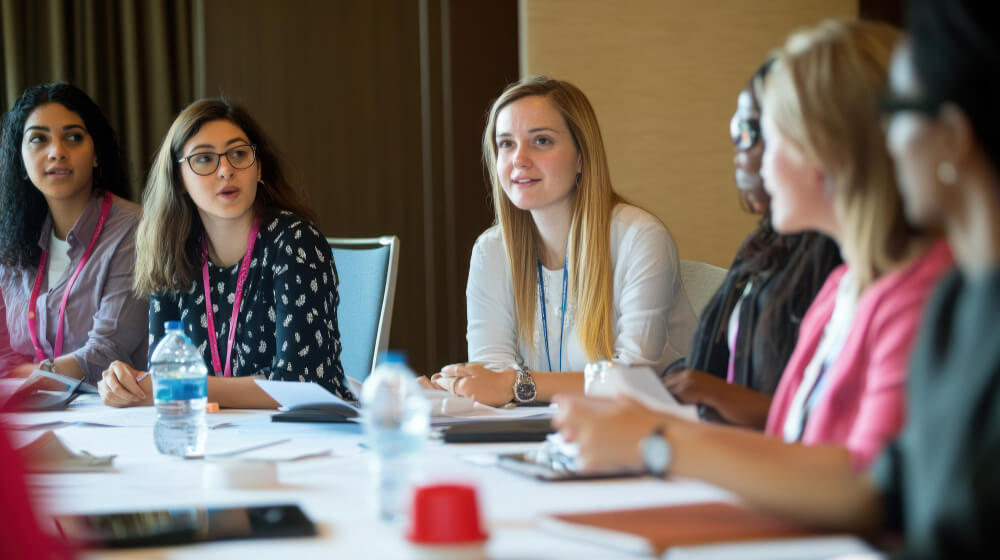
A venue that fits 2,000 people feels hollow with 300 in it. A space built for 400 becomes a fire hazard at 600. Both extremes hurt the experience in different ways.
Beyond raw capacity, think about flow. Can people move comfortably between sessions? Is there enough space for networking without it feeling cramped? Do the breakout rooms actually fit the breakout groups? The numbers must work on paper and in practice.
9. Is the venue accessible for people with disabilities?
One of the most important aspects of event planning is to be inclusive, by checking for accessibility features, such as ramps, elevators, and restrooms. A venue that is accessible allows all who should attend, to do so.
10. What are the ideal dates and times for the conference?
Pick the dates without conflict with major holidays or events. When a survey is released can also affect turnout and participation.
11. Are there any conflicting events or holidays to avoid?
Research competing events that might affect attendance. Don’t host your conference when the industry is at a peak season or when local holidays are taking place.
12. How much time is needed for setup and teardown?
Allow time for decorating, technical setup, and cleanup. Good planning means a smooth event, with less stress in the last 48 hours.
13. Who are the ideal speakers or panelists?
Look for influencers or experts in your industry that can bring value to your conference. However, events are rarely successful without engaging speakers that will draw in attendees and provide reassurance for the event.
14. How many sessions or workshops will there be?
Design a well-balanced agenda keeping everyone engaged but not overloaded. Having too many sessions leads to fatigue, too few, and attendees are left wanting more.
15. What topics or themes will be covered?
Deliver session topics that meet the desires and demands of your attendees Making sure the content is relevant ensures attendees get value from the conference.
16. How will you keep attendees engaged (Q&A, polls, networking)?
Add interactive components to liven up the meeting. In order to enhance the attendee’s experience you can use some engagement tools such as live polls or networking breaks.
17. Will there be breakout sessions or group activities?
Breakout sessions allow more in-depth discussion and networking. Learning in small groups helps one approach and learn better.
18. How will you promote the conference (social media, email, partnerships)?
Create a marketing plan that focuses on how you will reach your target market. Leverage various channels such as social media, email campaigns, and partnerships to reach your audience.
19. What is the registration process, and how will you track attendees?
Registration is usually the first real interaction an attendee has with your event. And first impressions stick.
Online registration is now the default for most organisers. They use an event management system to streamline planning, and registration is where most of that starts. The platform you pick should handle logic-based forms, different attendee categories, and connect directly to check-in without any manual work in between.
The check-in experience matters just as much. Long queues at entry are one of the most common complaints at large events. QR codes move people through faster, and their adoption tells you why. As per a statistics report by Krofile, nearly 84% of mobile users worldwide have scanned a QR code at least once, which means your attendees already know how to use them. For higher footfall, facial recognition goes a step further. Leading facial recognition systems now correctly identify individuals 99.85% of the time, making it a genuinely reliable tool for large-scale entry management, says ANDOPEN.
Dreamcast connects both into one system. Every sign-up and entry scan feeds a single dashboard, giving you live footfall, guest distribution, and abandoned registrations in one place. When registration and check-in talk to each other, you stop guessing and start knowing.
Discover more insights about online event registration here.
20. Are there early bird discounts or incentives for registration?
Give incentives to register and attend early. Creating a sense of urgency by offering early bird prices or exclusive perks can increase registrations.
21. What is the key message or theme of the conference?
Craft a compelling theme that resonates with your audience and aligns with your goals. A strong theme helps unify the event and makes it memorable.
22. How will the event align with your organization’s brand?
It also helps to have the conference align with your brand values and messaging. Uniform branding establishes trust and solidifies your organization’s identity.
23. What software or tools will you use for registration and ticketing?
Go for one solid event tech stack like Dreamcast and look for the following features or solutions:
The right registration platform does more than collect sign-ups. Here is what to look for:
- Customisable registration forms that adapt to different attendee types, ticket categories, and conditional logic
- Multiple ticketing options including paid, free, early bird, group, and VIP
- Secure payment processing with support for multiple currencies and payment methods
- Automated confirmation emails and reminders to reduce no-shows
- On-spot and online registration to handle both pre-event and walk-in attendees
- QR code and facial recognition check-in for fast, queue-free entry
- Badge printing triggered automatically at check-in
- Real-time dashboard analytics covering registrations, footfall, and drop-offs
- Abandoned registration tracking so you can follow up and recover lost sign-ups
- Role-based access control so different team members only see what they need to
- CRM and marketing tool integrations to keep your attendee data connected
- GDPR-compliant data handling with consent management built in
- Scalability to handle traffic spikes without slowing down or crashing
24. Will you need a mobile app or website for the conference?
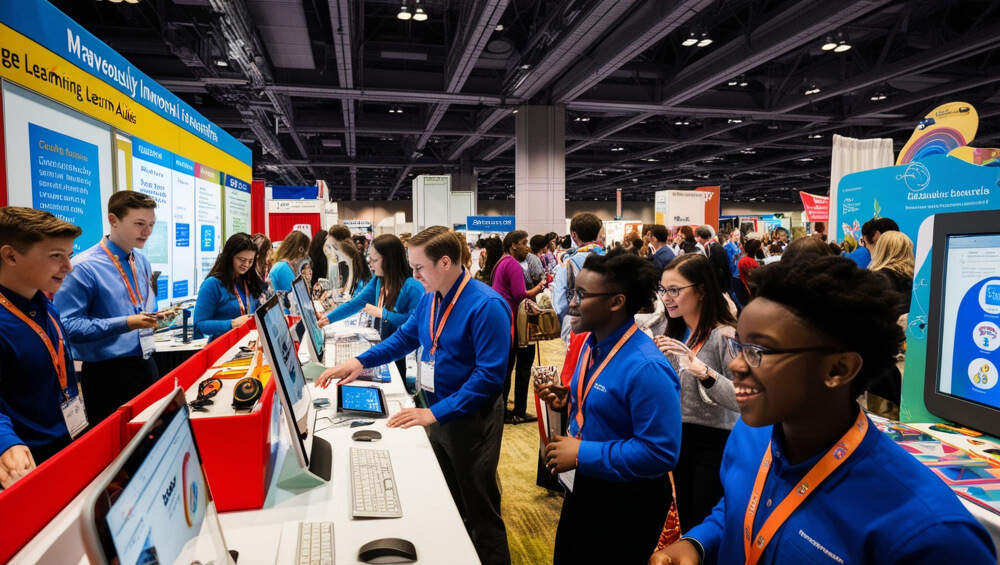
A dedicated mobile event app works better for modern-day events. This table will help you understand why:
| Feature | Mobile Event App | Event Website |
| Schedule & agenda | Live updates, personalised agenda | Static or embedded calendar |
| Networking | In-app attendee directory, 1:1 chat | Limited or none |
| Navigation | Interactive venue maps | Basic directions |
| Notifications | Push notifications in real time | Email only |
| Engagement | Live polls, Q&A, gamification | Minimal |
| Access | Requires download | Browser-based, no download needed |
| Best for | Multi-day, high-engagement conferences | Smaller events or pre-event information |
Learn more about how Dreamcast’s mobile event app saw a whopping 50% download rate at one of Asia’s biggest digital technology events and facilitated 700+ investor meetings via its exceptional B2B networking feature: The India Mobile Congress 2025 x Dreamcast mobile event app.
25. What AV equipment is required (microphones, projectors, etc.)?
Verify the AV options the venue has, or rent it elsewhere. You need high-quality audio and visuals to create a professional experience.
26. Will there be live streaming or recording of sessions?
Consider offering virtual access for remote attendees or future use. Recorded sessions can extend the life of your content and reach a broader audience.
27. How will you collect feedback from attendees?
Collect feedback through surveys or suggestion boxes to evaluate the success of the event and make improvements for future iterations. Post-conference feedback is incredibly important to help you with honing the way you organize conferences.
28. What metrics will you use to measure success?
According to Forrester’s B2B Events Survey, 57% of B2B marketing professionals say demonstrating event ROI is a very important priority, while 45% say maximising the value of event data is equally critical. Yet most teams still track the obvious numbers and stop there.
A well-measured event looks at three layers:
| Layer | Metrics |
| Attendance | Registration vs. actual footfall, no-show rate, walk-ins |
| Engagement | Session attendance, app usage, poll responses, networking activity |
| Business impact | Leads generated, pipeline influenced, sponsor ROI, post-event conversions |
The numbers in the first column tell you what happened. The ones in the last column tell you whether it was worth it. Most events obsess over the first and underinvest in the third.
29. How will you maintain connections with attendees post-event?
Follow up with emails, newsletters, or social media engagement. Keeping the connection alive gets your audience going and helps you build long-term relationships with them.
30. Will you share session recordings or resources after the conference?
Add value through content-sharing with attendees and non-attendees. Resources collected after the conference support the impact of the conference and extend its reach.
31. What catering options are available, and do they meet dietary restrictions?
Include a range of food types and be prepared to meet any dietary needs. Considerate catering helps to elevate the attendee experience, ensuring everyone feels included.
32. How will you handle emergencies or unexpected issues during the event?
Every event, no matter how well planned, will throw something at you. A session running over, a speaker dropping out last minute, a technical failure mid-presentation. All that matters at the end of the day is whether your team is ready when it does.
A solid emergency plan covers three areas:
Technical failures: Have backup devices, offline copies of presentations, and a dedicated tech support person on the floor, not backstage.
Medical emergencies: Know where the nearest hospital is. Have a first aid kit on site. Brief your staff on escalation protocols before the event begins.
Operational disruptions: Late vendors, no-show speakers, overcrowding at entry points. Each of these needs a pre-decided response, not an improvised one.
Run a dry walkthrough with your core team before the event. Go through the “what ifs” out loud.
33. What transportation and accommodation options are available for attendees?
Include details about nearby hotels and how out-of-town guests will get there. Having a clear direction allows those attending to plan out their trip properly and makes their experience even better.
34. How will you ensure clear communication with speakers, sponsors, and attendees?
Email updates, FAQs, and a dedicated point of contact can go a long way in addressing these concerns. Trust is built when everything is out in the open and there is no room for misunderstanding.
35. What is the contingency plan for bad weather or last-minute cancellations?
Have contingency plans for the unexpected. Having a Plan B, whether that’s a virtual alternative or a new date, means the event doesn’t have to be canceled.
36. How will you manage attendee check-in and badge distribution?
The check-in process needs to be more efficient. It’s that point of the event where long waiting times do the most damage. Attendees are all pumped up to attend the main event and slow-moving queues or a heavy crowd put them off. Plus, it’s also not the best thing to happen for event operations generally. Delayed entries lead to heavier staff involvement, delayed event schedules, chaotic crowd movement, and confusion everywhere. Here are some check-in and badging related best practices for your next conference:
- Set up multiple check-in points. Funnelling everyone through one or two entry lanes is the fastest way to create a bottleneck. Map your expected footfall and staff accordingly.
- Use digital check-in over manual lists. Paper registers and spreadsheet lookups slow everything down. QR code-based check-in lets staff verify and clear an attendee in seconds.
- Separate walk-in registration from pre-registered check-in. Mixing the two queues creates confusion and slows both down. Keep them distinct, with dedicated counters for each.
- Brief your check-in staff thoroughly. Technology only helps if the people operating it know what to do. A quick 30-minute briefing before doors open can prevent hours of chaos.
- Print badges on demand, not in bulk. Pre-printed badge walls create sorting delays and errors. On-demand printing triggered at check-in is faster and far more accurate. Dreamcast’s 10-second badging solution does exactly this. An attendee checks in, the system verifies them, and a personalised badge prints in under 10 seconds. No sorting, no searching, no pile-ups.
- Go contactless where possible. Facial recognition check-in removes the need for attendees to pull out their phones or remember a booking reference. At Jaipur Literature Festival 2026, Dreamcast deployed facial recognition-powered check-in across entry points, processing thousands of attendees smoothly without queues building up.
- Have a manual fallback ready. Technology can fail. Have a backup process your team can switch to without losing more than a few minutes.
- Monitor entry flow in real time. A good check-in system gives you a live dashboard so you can spot a building queue and redirect staff before it becomes a problem.

37. What is the plan for post-conference follow-up and thank-you notes?
Send personalized thank-you messages to attendees, speakers, and sponsors. Gratitude of course promotes goodwill and strengthens relationships for future events.
Conclusion
If you want your conference to be successful, you must pay attention to detail and know exactly what you want to achieve. With these 35+ must-ask conference questions, you can tackle what’s ahead, simplify your planning journey, and create an event that your attendees will remember. This list is for both first-time organizers and seasoned pros, helping you stay organized and concentrated.
Whether you are choosing the right venue or using technology to run the event without a hitch, all of these parts work together to create the complete event experience. With the right planning, budgeting & marketing efforts your conference can meet its objective whilst adding value for both attendees, sponsors & speakers.