

Table of Contents
Event organisers today rely heavily on event metrics. And the reason is pretty straightforward. Data tells you what actually happened. Gut feelings don’t. A large-scale event has dozens of moving parts. Even the most organised teams can miss tracking a few areas. Knowing which metrics to track and having a clear checklist for them makes the whole process a lot less overwhelming. There’s another thing worth saying here. Raw data means nothing if you don’t know what you’re looking for. Numbers without context are just noise. But the right metrics, tracked the right way, can tell you a story about your event that no post-event debrief ever could.
So if you’re looking for a guide to help you figure out the event metrics game, you’re in the right place.
Table of Contents
What are Event Metrics?
Simply put, event metrics are numbers that tell you how your event is performing. They measure things like attendance, session popularity, adoption rates of new technology, etc. Event metrics give you a quantitative perspective of your event’s progress. They add more depth to your overall event report. They eliminate subjective opinions with objective numbers. By tracking real-time event metrics, you can make more informed decisions related to your event. This is backed by an observation made by Bear Analytics that 85% of event organisers today use analytics software in events to collect and make sense of event insights. Explore why tracking them is crucial in the next section.
Why You Must Track Real-Time Event Metrics?
When you wrap up an event, you get a basic idea about its success via attendee feedback and social media movement. But can you translate that into numbers? Not really. But real-time event metrics aren’t opinions. They comprise specific data points that help you take solid action to improve your events. For example, if an attendee says that they are super excited about your event, it’s a feel-good factor, but it doesn’t go beyond that. Whereas, if there’s a way you can track how many people registered within the first hour of your event registration window opening up, and the number turns out to be huge, you know for real that your event is grabbing attention! You can use these real-time event metrics to promote your event further. You can make logistical arrangements accordingly! Let’s go deeper and understand why tracking real-time event metrics is crucial:
See what’s happening on the ground: Footfall, entry points, crowd density. You get a live picture of your event as it unfolds, so you can fix issues before guests even notice them.
- Keep the guest experience smooth: Long queues and slow service don’t need to wait for post-event feedback to get flagged. You can spot and solve them in the moment.
- Make better revenue calls, live: When you know what’s selling and what isn’t, you can act on it right then.
- Know which marketing efforts are working: See what’s driving footfall and double down on it during the event itself.
- Get everyone on the same page: When your whole team sees the same live data, decisions happen faster, and coordination gets tighter.
10 Real-Time Event Metrics Every Event Organiser Must Track
Most event problems don’t announce themselves in advance. They show up in the middle of a crowd, mid-session, or during peak hours. That’s exactly why real-time event metrics matter. Here are 10 event metrics that you should definitely track:

1. Attendance Numbers and Demographics
Attendance numbers are the most fundamental of all event metrics, but there’s a lot more to them than just headcount. Knowing who showed up, where they came from, their age group, job roles, and industry tells you whether your event actually reached the right audience.
Break this down further. Track new versus returning attendees separately. A high returning attendee rate tells you your event has built loyalty. A high new attendee rate tells you your outreach is working. Both are good signals, but they point to different things. Your attendee management analytics should surface both clearly, not just give you a combined total.
Real-time event metrics here help you spot no-show patterns early, adjust check-in staffing, and understand peak entry windows so the ground team isn’t caught off guard.
2. Marketing Campaign Performance
You probably ran campaigns across email, social media, paid ads, and partner channels before the event. But which one actually brought people in? This is where most organisers go blind after the event ends.
Track source-wise registrations. See which campaign and platform drove the most sign-ups, which had the best cost per registration, and which audience segment responded the most. Real-time event metrics during the campaign period let you shift budget mid-flight instead of waiting for a post-event report to tell you what you already missed.
If your event registration system is properly integrated with your marketing tools, pulling this data becomes straightforward instead of a manual patchwork job.
3. Registration Conversion Rate
A lot of people visit your event page. Far fewer actually register. That gap is your conversion rate, and it’s one of the most telling event metrics you can track.
Look at how many people landed on your registration page, how many started filling the form, and how many completed it. If there’s a big drop-off midway, your form might be too long or asking for information that feels unnecessary. If people are landing but not starting, your page copy or pricing might not be doing enough work. Registration conversion rate also means how many people registered and how many actually showed up at the event.
Your event registration system should give you funnel-level visibility here, not just a final registration count. That’s where the real insight lives.
4. Audience Engagement
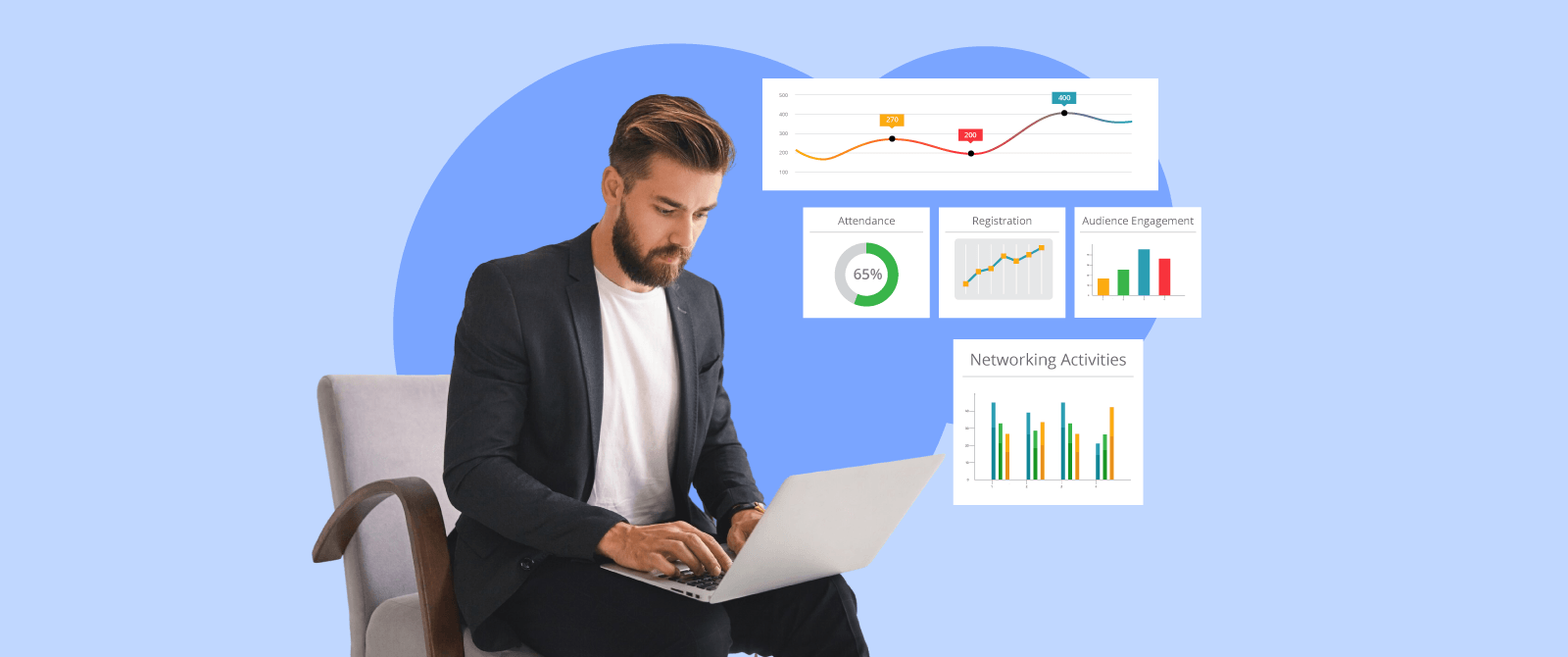
Footfall is one thing. Whether people were actually engaged is another question. Track session attendance versus event capacity to see which topics drew crowds and which fell flat. Monitor speaker ratings and post-session survey responses. These tell you what your audience genuinely valued.
Go beyond sessions, too. Polls, live trivia, and in-session surveys generate a layer of engagement data that passive attendance numbers never will. A session with 300 attendees and 60% poll participation is far more valuable than one with 500 attendees who sat quietly. High participation in these interactive elements is a strong signal of content-audience fit, and it’s exactly the kind of depth that real-time event metrics help you capture while the session is still running.

5. Adoption and Usage of Event Management App
Your event management app is only useful if people actually use it. Track download rates, daily active users, features accessed, and networking through the event app. These numbers tell you how deeply attendees engaged with the event experience you built for them.
Dig into which features saw the most activity. Was it the agenda? The networking section? The maps? Usage patterns reveal where attendees found value and where the app experience needs work for the next edition. Low adoption usually points to either poor onboarding or a feature set that didn’t match attendees’ needs.
6. Networking Activities
Networking is often the primary reason people attend B2B events. So it deserves its own set of event metrics. Track the number of B2B meetings scheduled, completed, and cancelled. Look at contact shares and connection requests made through the app.

These numbers do two things. First, they tell you how well your networking infrastructure worked. Second, they give exhibitors and sponsors concrete proof of engagement beyond footfall. If your platform facilitated 400 one-to-one meetings, that’s a number worth putting in your post-event report. Attendee management analytics should capture this at both the individual and aggregate levels.
7. Social Media Reach: Mentions and Hashtags
Track your event hashtag across platforms. Volume of mentions, reach, impressions, and sentiment all matter. A spike in mentions during a keynote tells you that moment landed. A drop during a panel might tell you it didn’t hold attention.
User-generated content is also worth tracking separately. When attendees post on their own, it’s organic amplification that no paid campaign can fully replicate. Real-time event metrics on social give your marketing team live signals to engage with posts, respond to feedback, or course-correct messaging while the event is still happening.
8. Event Lead Capture and ROI
For exhibitors and sponsors, event lead capture is often the single most important metric. Track leads collected per exhibitor, lead quality scores, and follow-up rates post-event. An exhibitor who captured 200 leads but converted none needs a different conversation than one who captured 50 and converted 20.
At the organiser level, measure total leads generated against event spend. This gives you a direct line to ROI and strengthens the case for future editions and continued sponsor investment.
9. Sponsor and Exhibitor ROI
Beyond lead capture, sponsors care about visibility and engagement. Track booth footfall, branded session attendance, app banner clicks, and mentions in social coverage. These are the numbers that go into your sponsor report and determine whether they come back next year.

Give exhibitors access to their own data through a self-serve portal if possible. When they can see their own real-time event metrics, the perceived value of your event goes up considerably.
10. Event Content Engagement
Post-event content has a life of its own if you let it. Track views, watch time, and shares on session recordings or highlight reels published after the event. Tools that auto-clip sessions into short highlights, the way Snipin AI does, make it easier to publish content quickly and measure what resonates.
This data feeds directly into planning future content, understanding which topics your audience wants more of, and keeping your event relevant between editions.
Conclusion
Tracking event metrics is not about collecting as much data as possible. It’s about knowing which numbers actually tell you something useful and acting on them at the right time. Whether you’re improving attendee management analytics, refining your event registration system, or helping sponsors prove ROI, the right metrics give every stakeholder a clear, honest picture of what the event delivered and what to do better next time.
FAQs
Event metrics are data points that measure how your event performed across attendance, engagement, revenue, and more.
They help you spot and fix issues as they happen, not after the event ends.
It depends on your goal. Lead capture, attendance, and engagement are good starting points.
It centralises data collection, making metrics easier to track and act on.
From the moment registrations open.