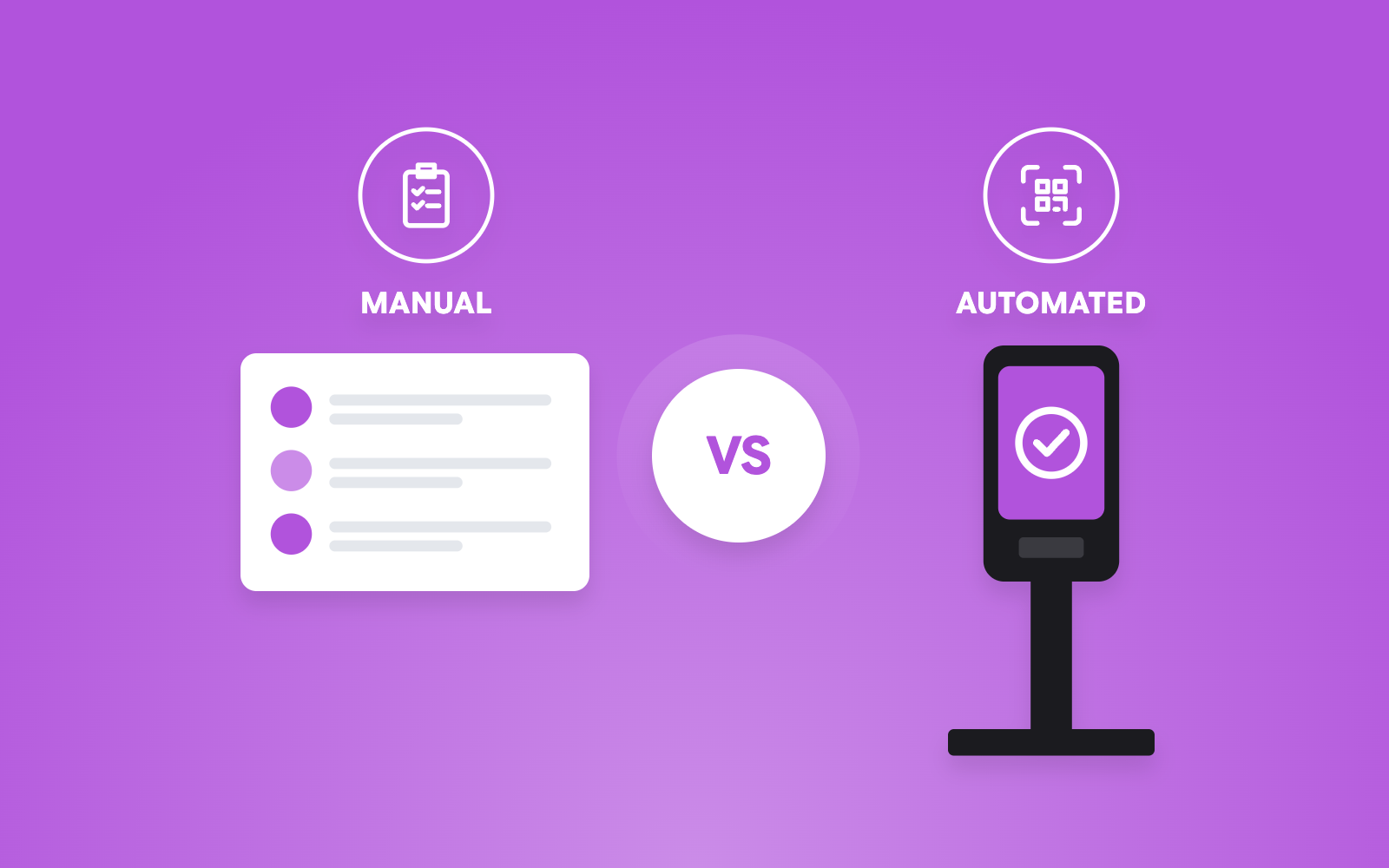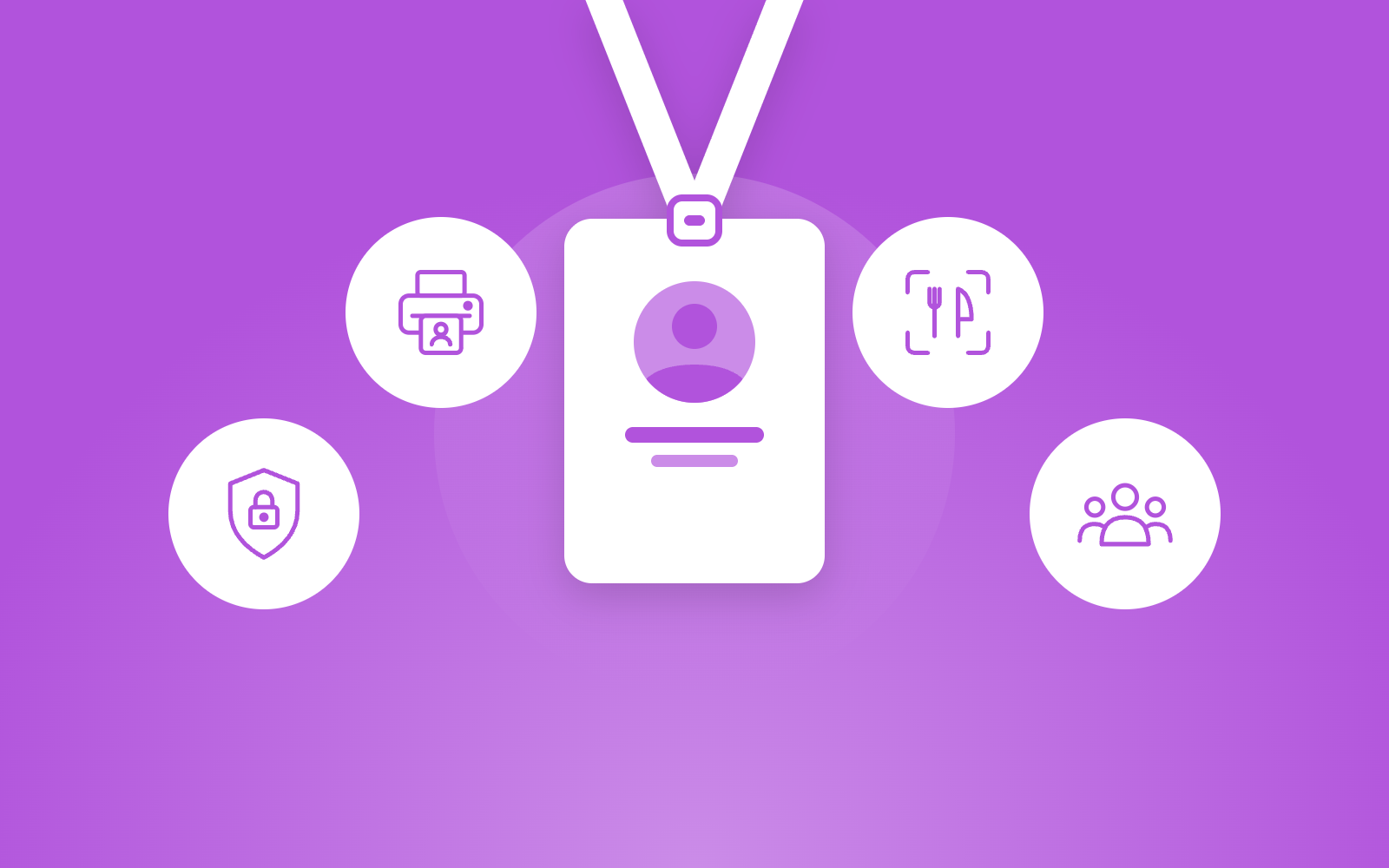

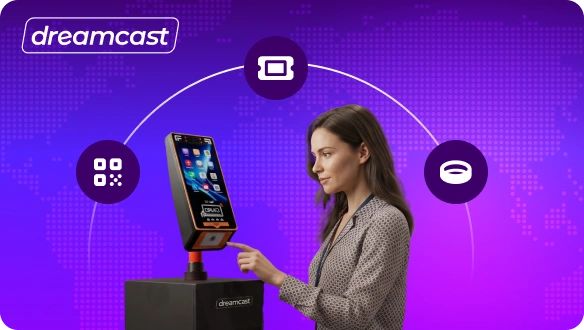

- Event badges are a more evolved version of name tags. They carry attendee details, a photograph, an access tier, and a QR or RFID code for check-in.
- With advanced technology, it is possible to include attendee photos on event badges for secure identity verification without requiring pre-printed badges.
- However, event badges are not self-sufficient for event security. They work best as part of a layered setup that includes facial recognition, QR scanning, and accreditation management at the venue.
- The best on-site badging systems offer real-time data synchronization, self-service capabilities, high-volume print capacity, high-quality badge output, and strong data security compliance.
Event badges are used to identify, verify, and grant access to attendees at any organised event. Earlier, these badges displayed basic details, such as attendees’ names and roles. They worked because events were simpler. But now, organisers are looking for event badges that do more. Footfall is higher. Security requirements are stricter. And the cost of letting the wrong person through, or holding up the right one, is much greater than it used to be.
Event badges with attendee photos are the most practical answer to this. The photo on the badge changes everything about how identity verification works on the ground. Is this possible? Yes, and it is more scalable than most organisers expect. This blog covers exactly how it works, what it takes to do it at scale, and what the fastest on-site badge printing setups look like today.
Table of Contents
Why Has Attendee Verification Become a Priority at Events?
Security, fraud prevention, and attendee experience are the three reasons driving this shift. Here is what each one means for event organisers in practice.
Security, Access Management, and Accreditation:
Why It Matters:
– High-footfall events have multiple entry points and overlapping zones. That complexity creates gaps that unauthorised entrants exploit.
– High-profile events that host VIP and VVIP guests, government officials, and public figures carry a higher security responsibility. These are individuals whose safety cannot be left to standard entry checks.
– Different attendee categories, press, exhibitors, staff, sponsors, and general attendees, all need different levels of access. Without a structured system, boundaries blur, and restricted zones get compromised.
– A security failure at a high-profile event is not just an operational problem. Gate crashes, accreditation misuse, and unauthorised zone access affect how the event is remembered and whether organisers are trusted with the next one.
What It Needs:
– Photo badges that distinguish attendee categories, guests, staff, vendors, and VIPs, at a glance.
– Each category needs its own access boundaries. Some zones open to all, others restricted by role.
– A two-layer identity verification system combining photo ID badges with facial recognition, giving organisers a verified, photo-linked attendee database for post-incident investigation.
– A structured accreditation system that assigns credentials based on role, clearance level, and zone permissions before the event begins.
Fraud Prevention
Why It Matters:
– Ticket fraud and duplicate entries are growing problems at large-scale events.
– Basic registration forms are easy to manipulate. Anyone can enter a false name or photo.
– Without a verified identity, organisers have no way to confirm who is actually on-site.
What It Needs:
– Link registration data to a verifiable identity source at the point of sign-up.
– Generate photo badges only after identity is confirmed.
– Embed QR codes or RFID into badges to prevent duplication or tampering.
Read how Dreamcast’s Aadhaar-based verification adds a government-backed layer of identity validation, currently available for events in India with Indian citizen attendees.
Attendee Experience
Why It Matters:
– Long queues and manual checks frustrate attendees before the event even begins.
– Slow entry creates a poor first impression that is hard to recover from.
– Attendees expect the check-in process to be as smooth as the event itself.
68% of attendees identify long check-in lines as one of their biggest event frustrations, highlighting the direct impact of entry experiences on overall event satisfaction. Source: ZipDo, Customer Experience in the Event Industry Statistics
What It Needs:
– Automate badge printing so attendees can collect their pass without staff intervention.
– Enable facial recognition check-in so attendees walk through without stopping.
– Target average badge collection time of under 10 seconds per attendee.
Dreamcast’s on-site badge printing kiosk, the Fastest Indian, does exactly this.
See the Fastest Indian in action.
Summary: High-footfall events now deal with multi-zone access, tiered accreditation, rising ticket fraud, and attendees who expect queue-free entry. Each of these demands an attendee verification and identification system that goes beyond manual checks and basic name tags.
What Are Photo ID Badges for Events?
A photo ID badge is an attendee credential that combines identity information with a printed photograph of the badge holder. The core purpose is straightforward: anyone checking the badge can instantly confirm that the person wearing it is the person it was issued to.
Beyond the photo, a well-designed event badge can carry a lot more. Depending on the event’s requirements, it can include:
- Full name and job title
- Company or organisation name
- Attendee category, such as delegate, speaker, press, staff, or VIP
- QR code or barcode for digital check-in and session scanning
- RFID chip for cashless payments and zone-based access control
- Access tier indicating which zones or sessions the attendee is permitted to enter
- Event branding and colour coding by category for quick visual identification
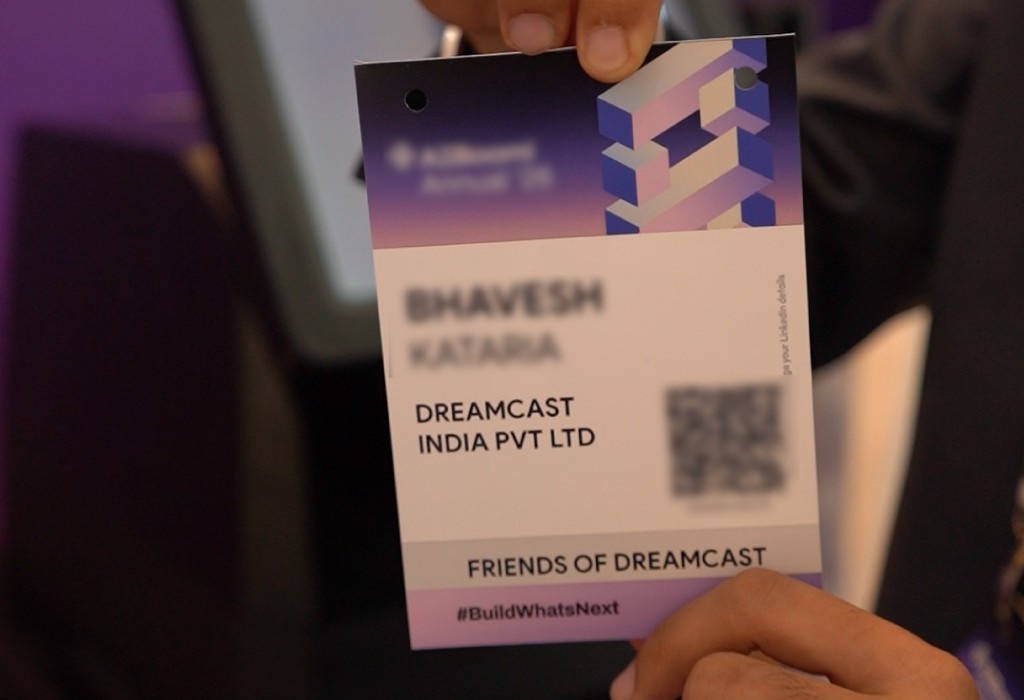
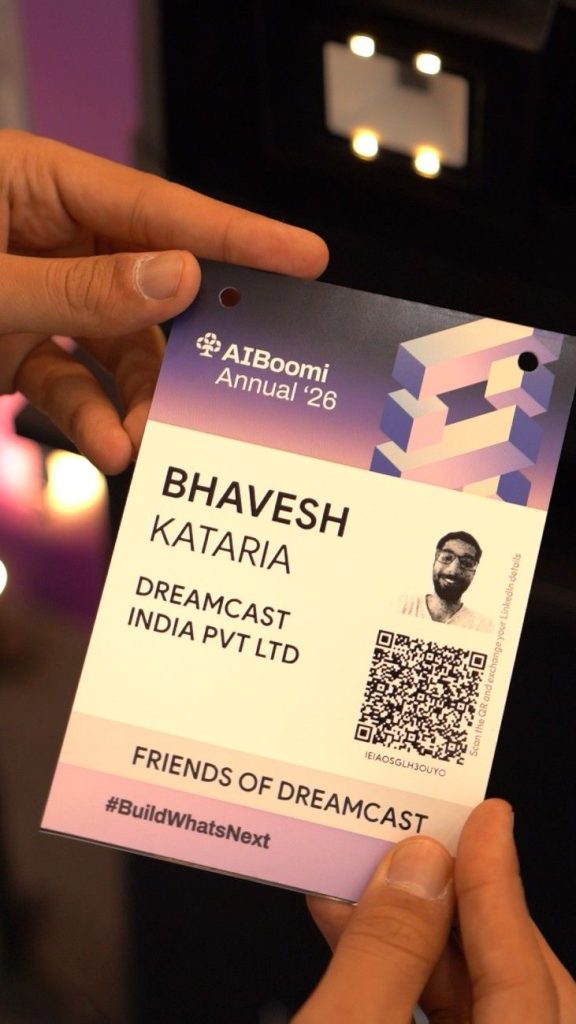
*The difference is immediately visible. A standard badge tells you a name. A photo ID badge tells you who the person actually is.
Why Do Photo Badges Matter at Events?
Enhanced Event Security:
- Removes guesswork from identity verification at entry points.
- Staff confirms identity visually in seconds without cross-checking lists.
- Combined with facial recognition, creates a two-layer verification system that is significantly harder to bypass than a name check alone.
Reliable Fraud Prevention:
- A badge generated only after identity is confirmed is tied to a verified individual, not just a ticket.
- Duplicate tickets get stopped not just at the scan but at the face.
- No one can use another person’s badge if the photo does not match.
Easy Access Management:
- Colour-coded photo badges reflect attendee categories at a glance.
- Staff make access decisions instantly without checking lists or asking questions.
- Reduces zone breaches caused by honest mistakes or deliberate misrepresentation.

Positive Attendee Experience:
- Faster identity confirmation means faster movement across entry points and zones.
- Attendees spend less time being verified and more time at the event.
- At large-scale events, this difference is felt simultaneously across every gate and access point.
Increased Multi-Zone Utility:
- A single photo ID badge carries all access and identity information needed for the entire event.
- Works across multiple venues, zones, and sessions without requiring separate credentials for each.
Summary: A photo ID badge does three things a standard name badge cannot. It confirms who someone is, determines where they are allowed to go, and gives organisers a verified record of everyone on-site. At a high-footfall event with thousands of people moving across multiple zones simultaneously, that combination is the foundation of how the entire event stays secure and organised.
Is It Possible to Print Attendee Photos on Event Badges in Real Time?
Yes. Attendee photos can be printed on event badges in real time using advanced facial recognition and on-site printing technology. Earlier, organisers had no choice but to pre-print badges before the event and distribute them on the day after lengthy manual verification. That created a set of operational problems that compounded under pressure:
- What if attendees who registered did not show up, leaving hundreds of pre-printed badges unused? Corporate events typically experience 20–35% attendee no-show rates, meaning roughly 1 in 4 pre-printed badges may never be collected. Source: Micepad, On-Demand Badge Printing for Events: The Complete Guide (2026)
- What if an attendee’s details changed after registration, a name correction, a role update, or a last-minute category change?
- What if walk-in registrations exceeded the pre-printed badge count?
- What if badges were misplaced, handed to the wrong person, or damaged before the event?
- What if an attendee needed to be removed from the access list after badges were already printed?
Each of these scenarios required manual intervention, extra staff, and time that events simply do not have on the day of the event.
Real-time on-site badge printing removes this dependency entirely. A badge is generated at check-in using the attendee’s verified registration data and a live or pre-submitted photo. The result is a personalised, photo-printed badge produced in seconds, with no pre-sorting, no outdated information, and no manual handling.
Here’s a quick comparison between pre-printed event badges and real-time event badges printed on the spot:
| Factor | Pre-Printed Badges | Real-Time / On-Demand Badges |
| Check-in process | Staff locate and distribute badges from pre-sorted stacks | Badge prints automatically after check-in |
| Handling walk-ins | Requires manual badge creation or blank stock | Built for walk-ins and same-day registrations |
| Name corrections | Requires reprints and exception handling | Can be corrected before printing |
| No-show waste | Unused badges are discarded | Only attendees who arrive receive printed badges |
| Technology dependence | Low | High (printers, software, power, network) |
| Scalability | Works best with stable attendee lists | Better suited for dynamic attendee lists |
| Staffing requirements | Sorting and distribution teams required | More technical staff but less sorting effort |
| Personalization | Limited after printing | Can use live attendee data and role-based designs |
| Risk factors | Misfiled badges, outdated information | Printer or connectivity issues |
At large-scale events, where thousands of badges need to be ready on demand, the process behind this matters as much as the technology itself.
Summary: Real-time photo badge printing works, and it works significantly better for large-scale events. The technology exists, and the operational case for it being far better than pre-printing is clear. The question for organisers now is which setup fits their event best.
How Does the Photo Badge Printing Process Work at Large Events?
Any typical large-scale event has a footfall of more than 100,000 visitors. Pre-printing these many badges requires days of preparation, careful logistics, and a contingency stock for errors and walk-ins.
“At scale, successful event experiences are rarely the result of last-minute execution. They are the outcome of decisions made weeks and months in advance, with a clear understanding of attendee expectations, operational realities, and contingency planning.”- Vippul Jaju, AVP Business Development, Dreamcast.
At the Jaipur Literature Festival 2026, with 300,000+ attendees across multiple days, the following kept badge collection from becoming a bottleneck. Here’s a snippet of its execution:
1. Instant attendee retrieval: Pre-registered attendees simply scanned their faces at the kiosk. The system instantly fetched their registration details, eliminating the need for manual searches or verification.
2. Rapid badge production: Once verified, badges were printed on demand. Colour photo badges were issued in 15 seconds, while black-and-white badges were printed in just 5 seconds.
3. No dependency on event staff: Attendees could complete the entire process themselves, from verification to badge collection, reducing the operational burden on organisers.
4. Unhindered walk-in handling: Walk-in attendees registered themselves at self-service terminals, received their mobile badges instantly, and could proceed directly to badge printing without requiring staff assistance.
5. Always up-to-date credentials: Because badges were printed in real time, attendee information remained accurate and reflected any last-minute registrations or changes.
6. Built for high-volume attendance: The on-demand printing setup enabled continuous badge issuance throughout the five-day festival, helping organisers manage large attendee volumes efficiently without relying on pre-printed badges or manual distribution
Read – Behind the Scenes of JLF 2026: How Dreamcast Simplified the World’s Largest Literary Festival
What Is the Tech Behind Large-Scale Event Badge Printing?
Large-scale badge printing at events is not just a printing problem. It is a data retrieval, identity verification, and hardware problem happening simultaneously, under time pressure, across several concurrent touchpoints.
The technology behind it needs to do three things reliably:
- Pull the right attendee data instantly.
- Print a verified, photo-quality badge without delay.
- Have a physical setup that works across different venue layouts without requiring a dedicated infrastructure overhaul.
Fast And Accurate Data Retrieval
The moment an attendee steps up to a kiosk, the system needs to locate their registration record, verify their identity, and confirm their access tier in real time. At a high-footfall event, this happens hundreds of times simultaneously.
The retrieval system needs to handle last-minute changes, too. A name correction, a category update, or a walk-in registration added hours before the event must reflect accurately on the badge without any manual intervention from staff.
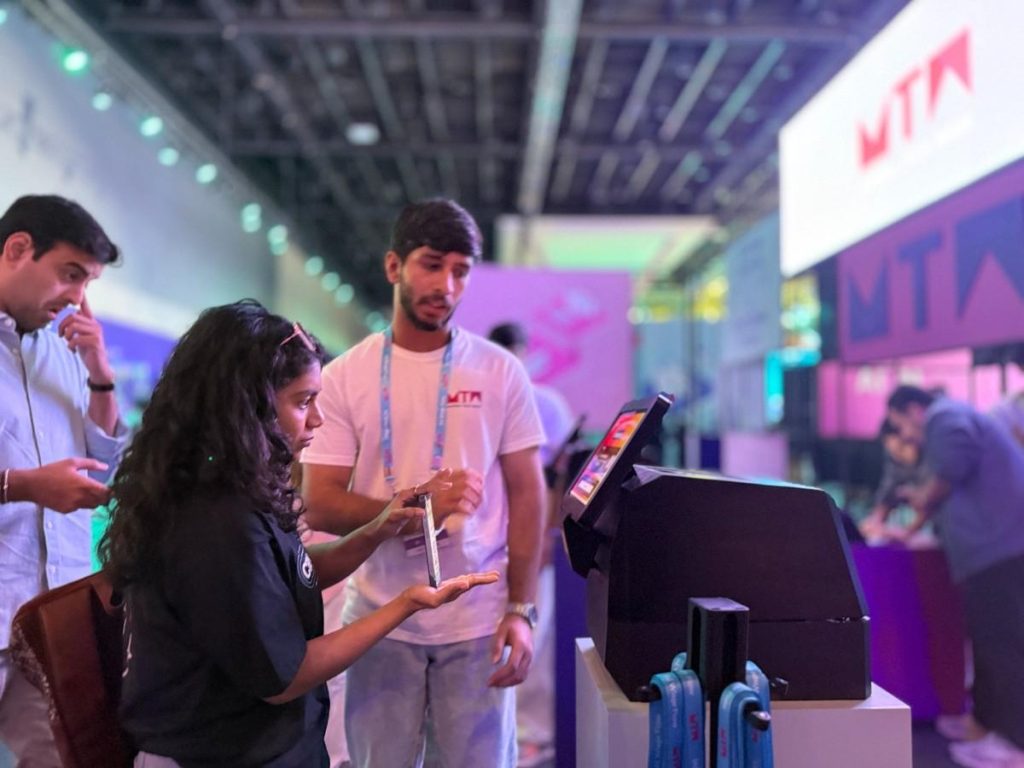
Dreamcast’s Fastest Indian uses facial recognition and QR-scanning technology to retrieve attendee details in seconds. This means zero manual lookups, zero delays at the kiosk, and a badge process that starts the moment the attendee arrives.
Print Quality And Capacity
A badge printer at scale is not the same as an office printer. It needs to handle continuous high-volume output without degrading in quality or slowing down over time.
Photo quality matters here, too. A blurred or poorly printed face on a badge defeats the purpose of having one.
The printer needs to consistently produce clear, legible, photo-quality badges across thousands of prints in a single day.
Here’s a snapshot of a badge printed by the FASTEST INDIAN:
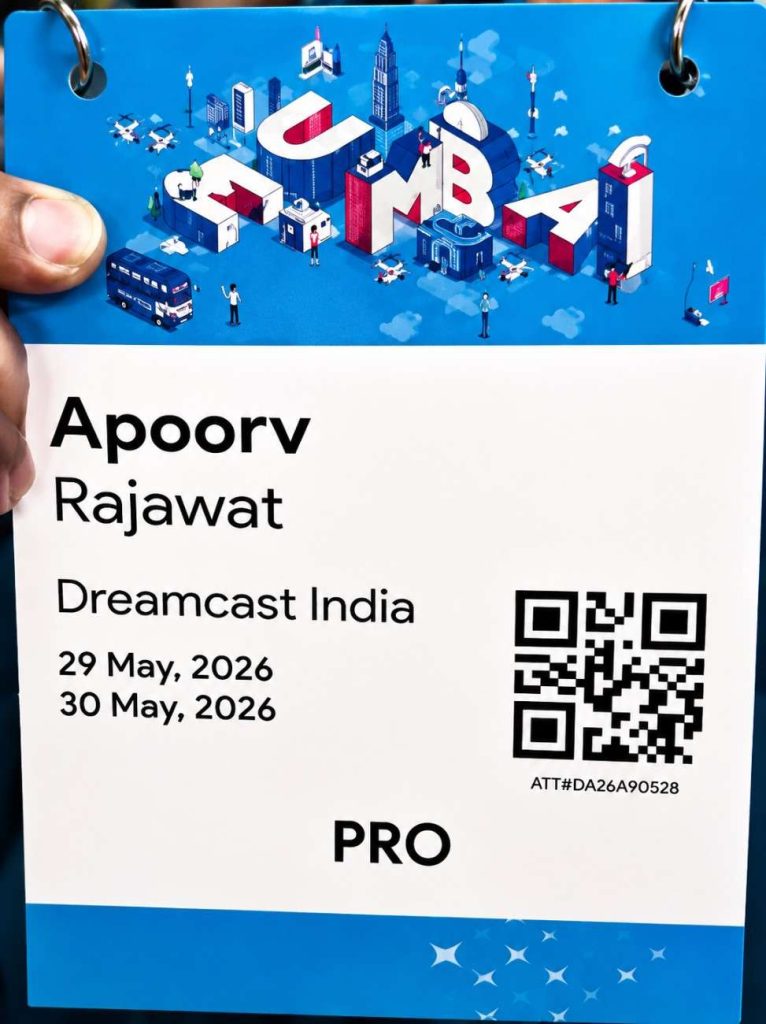
What all do you get in this badge?
Smart Data Layout
- Name, role, company, photo
- Clear access-level marking
High-Definition Print
- Sharp, easy-to-read text
- Clean, professional finish
Scan-Ready Codes
- Crisp QR output
- Fast, error-free scanning
Wearable Identity
- Looks polished on every attendee
- Feels official, part of the event
A Setup Built For All Venues
Event venues are not controlled environments. They have varying layouts, limited power points, and high footfall moving through unpredictable patterns. The physical kiosk needs to be modular enough to be placed wherever the flow demands, self-contained enough to operate without complex installation, and sturdy enough to run continuously across multi-day events without failure.
Dreamcast’s self-service badge printing kiosk is built around exactly these requirements. The result is a system that attendees can use independently, from retrieval to badge collection, without staff assistance at any step.
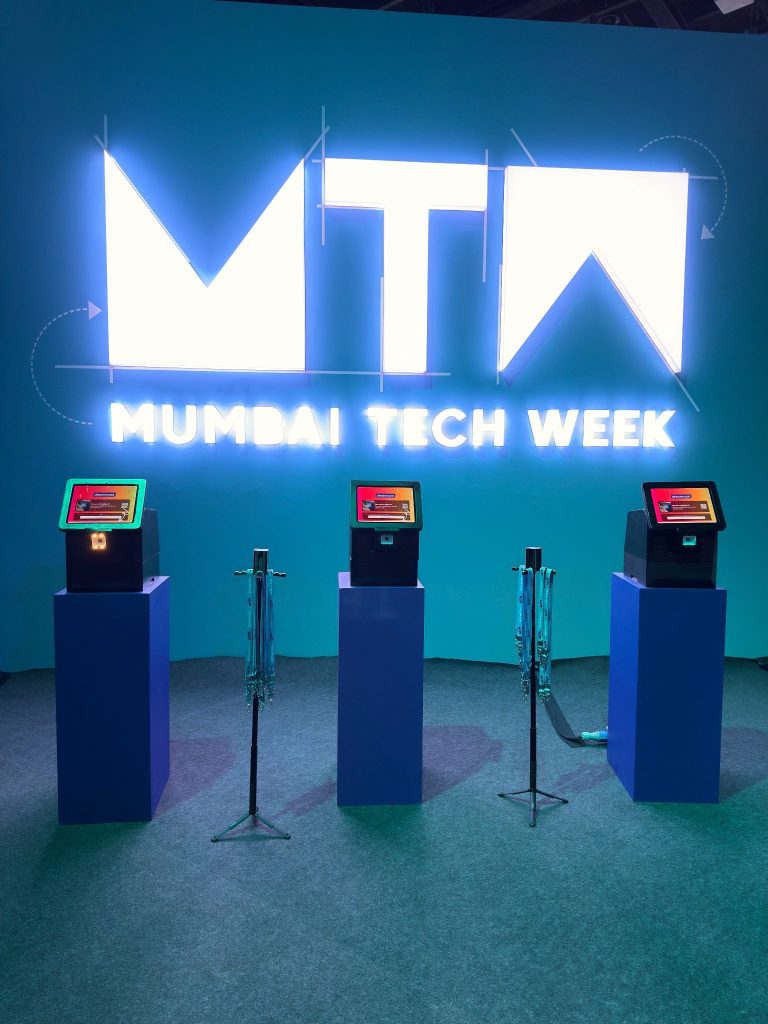
See the Fastest Indian being set up in minutes.
Summary: On-site badge printing technology at large-scale events needs to deliver on three fronts: quick data retrieval, high-quality printing, and high-volume handling. Dreamcast’s self-service badge kiosk uses facial recognition and QR-scanning for instant attendee verification, combined with high-capacity printing capabilities, to produce a finished badge in just 10 seconds. Its setup time is three minutes, making it one of the most venue-friendly badge printing options available for organisers today.
Is Collecting Attendee Photos for Event Badges Legal and Compliant?
Yes, but with conditions. Attendee photos fall under biometric and personal data categories in most jurisdictions. This means collecting them requires explicit consent, a clear stated purpose, and a defined data retention policy.
Under GDPR, organisers must inform attendees at the point of registration that their photo will be collected, how it will be used, and how long it will be stored. Attendees must actively consent, not just acknowledge.
What Does Complying With Attendee Photo Collection Guidelines Look Like in Practice?
Consent must be collected at registration, not assumed.
- Photos should be used only for the stated purpose, badge printing and identity verification, and nothing else.
- Data should not be retained beyond the event unless the attendee has consented to longer storage.
- Organisers should work with technology partners who store data on secure, compliant infrastructure.
Dreamcast’s registration and badge printing system is built with data compliance in mind. Attendee photo data is handled within a secure environment and is not repurposed beyond event operations.
All information about the attendees’ personal data collection presented here has been sourced from TermsFeed, GDPR Compliance for Events, Including Attendee Lists and Name Tags.
Can Photo Badges Alone Guarantee Security at Events?
No. A photo badge is one layer of a security system, not the whole system. On its own, it relies on a human checking the badge and making a visual match. At a high-footfall event with hundreds of entry points and thousands of people moving simultaneously, that is not a reliable enough process.
Photo badges work best as part of a layered security setup:
- Photo badge for visual identity confirmation.
- QR code or RFID for digital verification at the gate.
- Facial recognition for a second, automated identity check.
- Zone-based access control to ensure attendees only go where their credentials permit.
- A live attendee database that security staff can reference instantly if something is flagged.
Each layer compensates for the limitations of the one before it. Together, they create a system that is significantly harder to bypass than any single method alone.
What Should Organisers Look for in a Photo Badge Solution?
Not every badge printing solution is built for large-scale events. Here is what actually matters when evaluating one:
- Real-time data sync: The system should reflect last-minute registration changes, category updates, and walk-in additions instantly. A solution that works off a static pre-event list will create exceptions on the day.
- Photo quality and print speed: Badge quality reflects on the event. The printer should produce clear, legible photo badges consistently across high volumes without slowing down or degrading.
- Self-service capability: At scale, staff-assisted badge collection creates bottlenecks. A self-service kiosk that attendees can use independently removes that dependency entirely.
- Offline functionality: Venues have patchy connectivity. The system should handle badge printing offline and sync when the connection is restored.
- Compliance readiness: The solution should support GDPR and DPDP-compliant data handling, with clear data retention and consent workflows built in.
- Integration with registration and access control: Badge printing should not sit in isolation. It should connect directly to the registration platform and access control system so that data flows without manual intervention.
Best Practices for Using Photo Badges at High-Footfall Events
- Collect photos at registration, not on the day. Pre-submitted photos allow the system to verify identity before the attendee arrives, making check-in faster.
- Use colour coding by attendee category. It allows staff to make access decisions at a glance without checking a list.
- Plan kiosk placement around natural crowd flow. Placing kiosks at the points where attendees naturally converge reduces queue formation.
- Have a clear re-issuance process for lost badges. A lost badge at a high-security event needs to be deactivated and reissued quickly. Define this process before the event begins.
- Brief security staff on what to do when a face match fails. Technology can flag a mismatch, but a human needs to handle the exception. Staff need to know the protocol.
- Communicate the badge process to attendees before the event. A short email explaining what to expect at check-in reduces confusion and speeds up the process on the day.
Got Questions? Let’s Tackle Them:
Q1. Can photo badges be used for multi-day events?
Yes. The badge works across all days of the event. For tighter security, some organisers run a facial recognition check at entry each day, matching the attendee’s face to their registration photo every time they enter.
Q2. What happens if an attendee loses their badge mid-event?
Deactivate it immediately in the system and print a replacement on the spot. With real-time printing, this takes seconds. The attendee’s registration data and photo are already in the system.
Q3. What types of event badges are used for identity verification?
The main ones are printed photo badges, QR code badges, RFID badges, NFC badges, and smart badges that combine a photo with RFID or NFC. The right choice depends on your security needs, venue setup, and budget.
Q4. How many kiosks do I need for my event?
A rough guide is one kiosk per 300 to 500 attendees expected during peak check-in hours. Venue layout and entry points also affect the number. Your technology partner should help you work this out based on your specific event.
Q5. Is collecting attendee photos compliant with GDPR?
Yes, as long as attendees consent at registration, are told how their photo will be used, and data is not retained beyond the event without further consent. Work with a technology partner whose infrastructure supports compliant data handling.
Q6. What if the badge printing system goes down during the event?
Have a manual backup ready. Keep a printed attendee list and blank badge stock at each entry point. A good badge printing system also has offline capability, storing transactions locally and syncing when connectivity returns, so full outages are rare.
Conclusion
Events have grown in scale, complexity, and risk. The systems managing who gets in, where they go, and whether they are who they say they are need to keep pace.
Photo ID badges do more than add a face to a lanyard. They create a verified, visual, and digitally linked credential that covers identity confirmation, access management, fraud prevention, and post-incident investigation in a single pass. At a high-footfall event, this is a foundational requirement.
The technology to do this at scale exists, is proven, and is faster than most organisers expect. A 10-second badge process, facial recognition check-in, and Aadhaar-backed registration verification are not future capabilities. They are available now, with Dreamcast.
If you are planning an event and want to understand what a photo ID badge setup looks like for your specific requirements, the Dreamcast team is happy to walk you through it.
Talk to the Dreamcast team about your next event.