
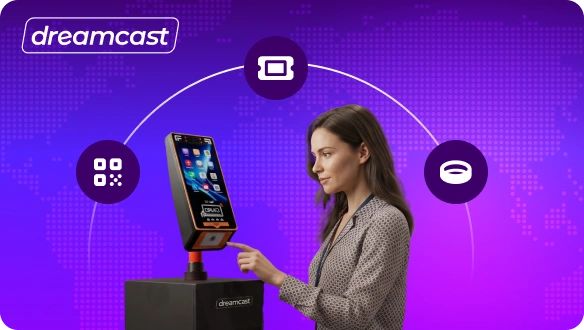
How attendees enter, navigate, and interact with the event space significantly impacts their overall event experience. This is why event access management has seen massive innovation in the past decade. QR codes and RFID technology are parts of this innovation. Both these technologies help organizers manage attendee flow through the venue. But they work in different ways. In this blog, we’ll look at both QR codes and RFID badges closely and analyse their basic differences. Get ready to know all about QR code event badges and RFID event badges.
Table of Contents
What are QR code event badges?
A QR code is like a square barcode that your phone can scan. It holds information in a pattern of black squares and can be used for various purposes like payments, event entry, info, etc.

QR-code event badges are great for events. Organizers can choose to print them or let people use a digital version on their phones. It’s really up to them.
Besides the QR code, these badges usually show details like the event’s name, the person’s name, the dates, what kind of guest they are, and anything else the organizer thinks is important.
So, how do you get these QR-code event badges?
Usually, after you sign up for an event, the system automatically sends you your QR-code badge. Like, when you register via Dreamcast, you get the badge on your WhatsApp or email right away. How you get it just depends on how the organizers want to get in touch.
QR code event badges: The Key Advantages.
QR codes? They’re everywhere, right? From tiny stores to upscale restaurants, they’re used for just about everything. Most people use them to pay, view menus, or drop reviews. Since QR codes are so common, they clearly have advantages. Let’s see why QR-code event badges are so popular.
1. Simple to Use
QR code event badges are great for events because they’re easy to use! People just want things to be simple when they attend events. QR code event badges get easily linked to the event registration system.
After people sign up, they get their QR code event badges on their phones right away.
Checking in becomes super easy, too. With QR codes, people can get into the event in seconds! Just scan and go. No long lines or checking needed.
3. Super Versatile
QR-code event badges are great because they work with most systems, helping things run more smoothly. If event planners choose an event check-in system that only uses QR codes, then the staff will have to scan badges and let attendees in. But, if they have turnstiles, QR codes still can be used! Basically, they are super easy to integrate with other event tech.
Other than making payments fast, QR codes can hold info, link you to sites, and even give you WiFi. At events, you can use QR codes in various ways to interact with and engage people, as they can hold a range of multimedia formats.
With these QR codes, people at events can give feedback, vote in polls, and fill out surveys. QR codes make it easier for everyone to get involved. Planners can also use them to market and promote their events.
E-mails containing QR codes to access exclusive session material or special event coupons are quite common these days.
3. Not Heavy on the Pocket
QR code event badges are an affordable way to do check-ins. Planning something? Ditch the printed badges and save big bucks with digital QR codes! Even if you do print them, it’s way cheaper than the usual check-in solutions. You also won’t waste materials or need a ton of staff.
4. A Really Fast Onsite Event Technology
On-site event technology has no business being slow. It should work on the instant principle. QR-code event badges don’t disappoint here. They are as quick as attendees want on-site event technology to be. A QR-code scan just takes 2-3 seconds. This way, the lines keep moving, and the crowd flow doesn’t get stymied at any point. Automatically, there are zero bottlenecks. The staff doesn’t have to keep an eye on every guest. Their work becomes more relaxed, so they welcome attendees much more pleasantly than is otherwise possible.

5. Go Well with Mobile Phones
These days, there’s no better tech than that which is mobile-friendly. It’s right there in people’s hands, easily accessible and usable. Attendees don’t have to worry about keeping their event tickets safe because there are none!
The QR-code event badges on their phones work like tickets to the event, and there’s no stress about forgetting them back home. Whether people have to pay for something or open a link via QR codes, the scanners on their phones work just fine.
Areas where QR-Code Event Badges Don’t Cut it
QR-code event badges are not perfect. Here are some of their weak spots:
Small Data Limit
A QR code can only store a bit of info. You can’t cram too much into it. So, an event check-in system could need extra links or steps.
Phone-Dependent
People need a phone with a camera to scan a QR code. If someone doesn’t have a smartphone or it’s broken, they might have issues with the onsite event technology.
Easy to Damage
QR codes on badges or paper can get ruined. Rain, dirt, folds, or scratches can make them hard to scan, which slows things down.
What are RFID Event Badges?
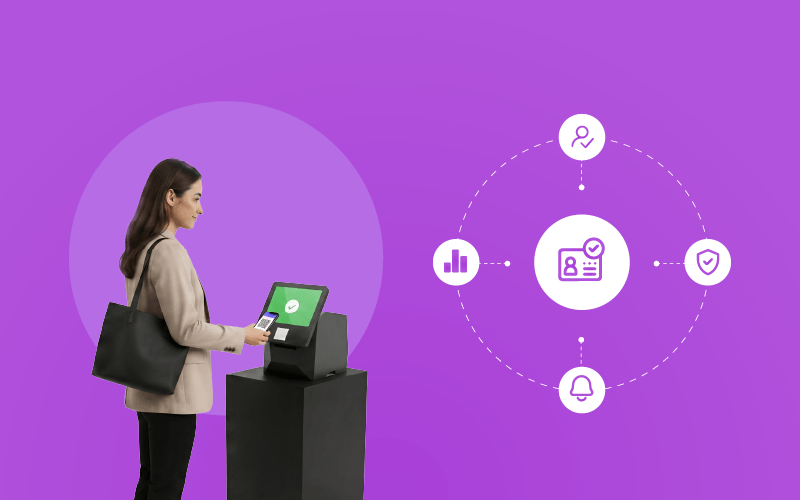
RFID event badges are a smart way to identify and track things using radio signals. It works without touching or scanning anything. A small chip called a tag is attached to an item or badge. A reader sends out radio waves, and the tag sends information back. This all happens in seconds.

You will see RFID used in places like libraries, factories, and big events. It helps organizers know who entered, where people moved, and when something was used. Compared to QR codes, RFID works faster and requires less effort from people.
How to include RFID event badges in events?
To get RFID for events, organizers work with event tech vendors like Dreamcast. These vendors provide RFID badges, wristbands, cards, readers, and other software. Dreamcast uses RFID technology in its Cashless solutions as well. This way, attendees don’t have to struggle with cash all the time. Payments become faster than ever before, and hugely benefit vendors.
RFID event badges: The Top Advantages.
Dataintelo notes that the RFID tech market will get bigger, growing by about a CAGR of 14.7% until 2033. If this happens, the market could be worth over $4 billion! This growth is probably because:
– People want to track things in real-time.
– Contactless entry is becoming more common.
– Data analytics are in high demand.
RFID event badges are becoming a popular tech option for events. Let’s figure out what makes them special!
1. Super Fast Entry
RFID badges speed up entry. Just walk past the gate, and you’re in. No scanning needed. This means shorter lines at concerts and conferences starting when they should. These badges help keep things moving smoothly.
2. Built to Last
These RFID badges can handle the weather. Rain or dirt won’t wreck them. They’re great for outdoor events because they don’t fall apart or fade like paper ones.
3. Know Where People Are
RFID badges help event organizers see where people are going. By knowing what booths and talks were popular, they can make the next event even better.
4. Totally Secure
RFID badges can’t be copied. Unlike QR codes, they can’t be used online. Making fake RFID badges would take special gear that’s hard to get. So, they are very safe.
5. Not Dependent on Battery or Connectivity
RFID event badges don’t need a smartphone or connectivity to work. Even if they are in the attendees’ pockets, the RFID reader can scan them. That’s why they are excellent for event venues with a patchy network.
6. Handles Big Crowds Well
RFID badges can be read in groups, letting hundreds of people in all at once. This is useful when lots of sessions start or end together.
RFID Event Badges: What are the Weak Points?
RFID event badges are cool, but here’s the deal:
1. High Cost:
They’re more expensive than QR code event badges. You have to pay for the RFID tags and readers, and they are not cheap.
2. Reading Issues:
RFID event badges use radio waves, which can be sensitive. If something messes with the signal or you’re too far, they might not scan right.
3. Getting Used to Them:
RFID event badges can be a little complicated. Staff and people coming to the event might need some time to learn, especially if they’re used to easy things such as QR codes or facial recognition for events.
QR codes vs RFID badges: How to Choose Right Based on Event Size and Access Control?
Choosing between event badge solutions depends on how big your event is, how much control you need, and how much you can spend.

Below is a simple breakdown to help you decide. This comparison focuses on real event needs. Use it to quickly judge what fits your setup best. QR-code event badges vs. RFID event badges is not about which is better overall, but which is better for your event.
QR-code event badges vs. RFID event badges: Quick comparison.
| Factor | QR code event badges | RFID event badges |
| Best for event size | Small events with up to 500 people | Large events with 1000+ attendees |
| Entry experience | Guests stop and scan at the entry | Guests walk through without stopping |
| Queue management | Works well when crowds are limited | Handles heavy footfall with ease |
| Setup effort | Very quick to set up | Needs planning and hardware |
| Access control | Basic access rules | Strong zonal control, like VIP or backstage |
| Tracking ability | Limited insights | Detailed movement and session data |
| Multi-day events | Needs repeat scanning | The same badge works across days |
| Budget impact | Low-cost option | Higher cost but higher automation |
| Security | Duplication is possible via photographs and digital sharing | Duplication is very difficult. Can be deactivated remotely in case of security concerns |
| Durability | Not damage-proof. A blur or scratch can make them unreadable | Completely damage-proof |
How to decide?
If you are running a workshop, meetup, or small conference, QR-code event badges vs. RFID event badges usually tilt in favor of QR codes. They are easy, fast, and budget-friendly.
For expos, festivals, or large conferences, RFID event badges make more sense. They reduce waiting, improve control, and give deeper insights.
In the end, match the technology to your event size, access needs, and budget. The right choice makes the event smoother for both guests and organizers.
Wrapping Up:
Event badges really do shape how people get around at events. They’re way more than just souvenirs; they seriously affect stuff like how fast check-in goes! In this blog, we’re breaking down QR code event badges vs. RFID event badges. We’ll look at what’s good and bad about each, so you can pick what works best for your event. Unlike using facial recognition for events, these badges mean people use something besides their face to get in and do things. QR codes are simpler to get going and cheaper, but RFID badges need a bit more setup and cost more. That said, RFID badges are way more secure and give you better control over different areas. To figure out what’s right for you, really think about what you need and chat with your event tech partner.
FAQs
You need a phone to scan QR codes, but RFID just does its thing automatically.
Go with QR codes. Inexpensive and easy to get going.
The attendees simply have to walk into the venue. The RFID readers automatically detect their RFID devices. No more waiting in lines for someone to manually check everyone in.
It really depends. QR codes are great for smaller, cheaper events. RFID is a solid choice if you’re expecting big crowds and have a budget to spend