

Managing a large event isn’t easy. There are a million moving parts, and at the heart of it all? People.
Attendees, speakers, exhibitors, VIPs, everyone is moving from one point to another, sometimes all at once. Without a plan in place, things can spiral into confusion and chaos pretty quickly.
That’s where attendee flow management comes in. It’s not just a fancy term but a secret sauce that keeps your event running. Whether it is about organizing a music festival, a massive conference, or a sporting event, mastering how people move through your space is essential.
Today, let’s dive into smart event crowd control strategies to manage the attendees’ flow from the entrance to the final session.
Table of Contents
Why Attendee Flow Management Matters
Think about hundreds or thousands of people arriving at your event within the same time frame. Some are looking for registration desks, others want to grab a coffee, and a few are heading to the main stage. Without a proper plan, chaos is inevitable.
That’s what poor attendee flow management looks like.
On the flip side, a well-managed event feels calm, organized, and intuitive. Attendees know where to go, crowds are spread out, and everything just flows. That’s the experience you want to create.
With a good attendee flow, the wait time becomes short, attendees are happier, and your team gets better control.
So, how do we get there? Follow the strategies to manage attendee flow.
Event Crowd Management Strategies and Tips
Pre-Event Planning: The Foundation of Smooth Flow
The best attendee flow strategies start before the event even begins.
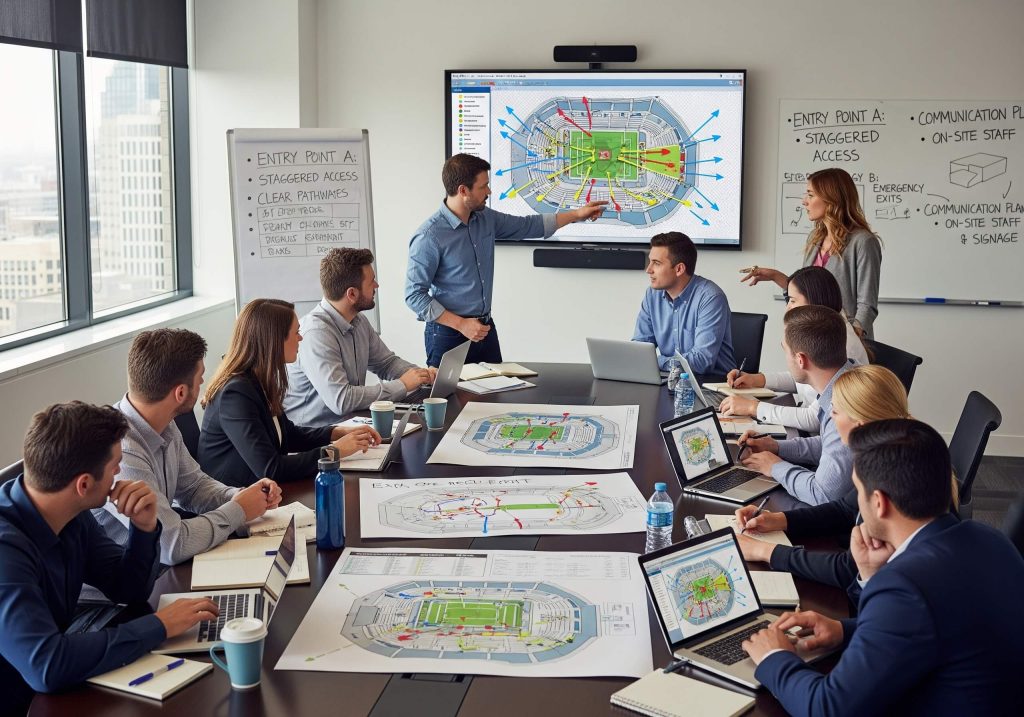
Strategy 1. Smart Venue Mapping
The first rule of attendee flow? Understand the space you’re working with. Get your hands on detailed venue maps.
When your event has high-traffic areas, it’s a good idea to create such a map. Once identified, you can prepare buffer zones, signage, and additional staff for these hotspots.
Strategy 2: Segmented Check-In Times
You don’t want everyone arriving at the same time. Segmented entry points help you avoid such an issue. So, create entry windows where VIPs enter early, general attendees get their time slots, and exhibitors and staff make their check-ins earlier.
This technique helps spread out the flow, reduces lines, and creates a more relaxed experience.
Smart Layout Designs for Better Movement
Designing the layout with attendee flow management in mind is key. Check if the layout is designed for the movement.
Strategy 3. One-Way Pathways
Using one-way traffic lanes in areas where things tend to get tight is one of the most significant attendee flow management strategies. What if the hallways are long and the booths have enough space? The attendees can have a better experience.
With one-way pathways, you can ensure all the attendees move in the same direction instead of having an awkward congestion.
Pro Tip: Clear color-coded signage helps attendees follow these paths, reducing confusion.
Strategy 4. Break the Venue into Zones
Breaking your event space into different zones is a great event traffic flow strategy. There are several zones you can think of, including networking lounges, food courts, keynote halls, and workshops.
No matter which zone you add to your event, it must be accessible without anyone having a problem.
A great idea to create different zones is to spread activities out. This can naturally encourage people to explore and prevent everyone from clumping in one place.
Strategy 5. Open Space Design
If possible, ensure the event layouts are open instead of creating narrow corridors. People tend to get more room to breathe when the layouts are open. Also, open space helps manage the large crowd density effectively.
Event Crowd Control Technology To Ensure Better Flow
Modern events need modern event traffic flow solutions. Here’s how tech helps simplify attendee flow management.
Strategy 6. Digital Ticketing & Registration
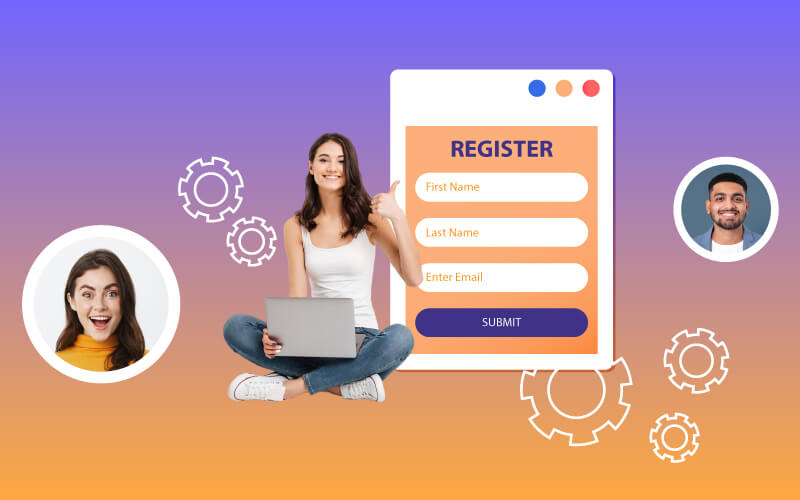
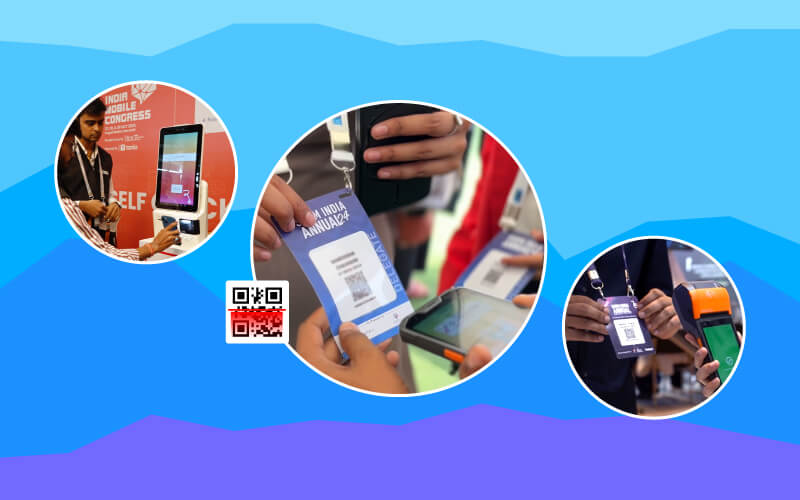
Encourage registration with QR-coded tickets. This reduces the time each person spends at the check-in counter, easing congestion.
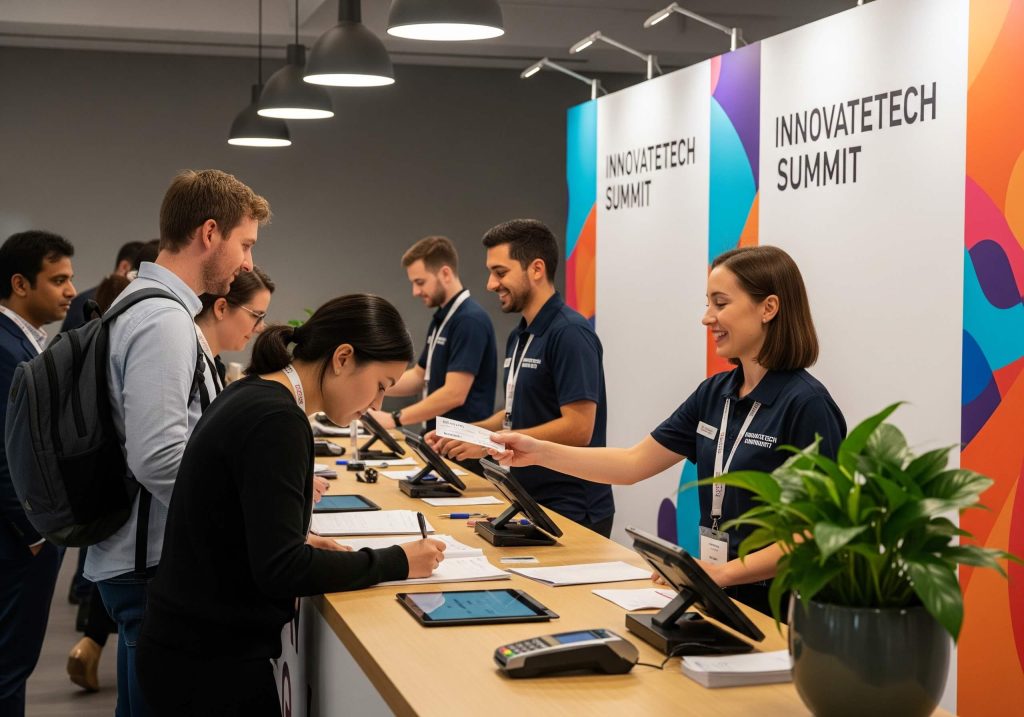
Apps or automated kiosks can also be implemented to manage quick check-ins. It is faster, safer, and more efficient.
Strategy 7. RFID and NFC Badges
RFID badges and wristbands work with a simple tap. That’s why attendees can now check in, access zones, and make payments quicker. Therefore, the contact points can be reduced, and the flow can become faster.
Plus, RFID solutions are designed to provide real-time data on the attendees’ touchpoints, helping you to monitor the crowd better.
Strategy 8. Facial Recognition for Entry
To speed up entry for large events, using facial recognition is another great option. Large event crowd management becomes fast, secure, and reduces intervention at the gates.
Strategy 9. Mobile Event Apps
A mobile event app is more about showing the schedule. A great app can help:
- Real-time navigation throughout the venue
- Inform attendees about the different zones
- Suggest alternative time slots
- Notify attendees about the entry points and session changes.
Signage and Staff: The Human Touch Still Matters
Tech is great, but you also need boots on the ground. Your team plays a major role in how well the crowd flows.
Strategy 10. Train Your Staff For Flow
A trained staff for events can help manage flow, answer questions, and direct attendees. Speaking of staff, placing your staff is also important. Make sure staff members are placed in the areas where crowd control is important.
Ensuring staff visibility is also key to making large event crowd management better.
Strategy 11. Make Signage Clear, Visible
Signage is one of the simplest but most overlooked event crowd control strategies. Make your signs bold with arrows to manage the access, registration decks, food zones, and breakout sessions.
Live Monitoring and Crowd Analytics
Even with perfect planning, things can shift at the events because of the dynamic nature of the events. That’s where real-time monitoring becomes a game changer.
Even when there are the best plans in place, adjusting things in real-time is important.
Strategy 12. Dynamic Queue Management
Long lines can ruin the event experience. Make your queue management stop letting the experience go down.
Therefore, the flow not only gets improved but also engages people in their waiting time.
Pay Attention to High-Traffic Spots Like Food Courts
These areas can easily become crowd magnets.
Strategy 13. Distribute Food & Beverage Stations
Distribute food vendors or bars across the venue instead of placing them all in one corner. Consider incorporating the directional signage.
Also, you can use the event mobile app to provide alerts and ensure there is no rush during the peak hours.
Strategy 14. Go Touchless With Cashless Payments
No one likes waiting in line to pay. Use tap-to-pay systems, mobile wallets, or prepaid RFID systems to keep things fast and frictionless.
Entry & Exit Strategies for Attendee Flow Management
It’s easy to focus only on what happens during the event. But entry and exit are just as important.
Strategy 15. Separate Entry and Exit Points
Avoiding people’s entry and exit through the same gates is another one of the proven event crowd control strategies. This separation prevents cross-traffic and congestion.
Strategy 16. Stagger the Exit Flow
Just like with entry, encourage staggered exits.
You can wrap up different zones at different times. Also, make sure to keep the entertainment or food stalls running longer.
Therefore, the crowd can get multiple exit options while you have the less headaches.
Always Be Ready for the Unexpected
Be prepared for unexpected situations. This way, you can prevent a bad attendee experience.
Strategy 17. Clear Emergency Routes
Make sure all your exits are accessible for the attendees. There have to be no pathways blocked, and include emergency routes in your attendee map or app.
Strategy 18. Communication System
Effective communication is a part of event success. Provide attendees with real-time alerts via the app or digital displays.
Therefore, in case of any urgent announcements, they are informed.
Post-event Analysis
Strategy 19: Analyze Movement Patterns
Analyze the attendees’ flow with heatmaps, check-ins, and session attendance. This way, you can analyze which routes worked and which didn’t, and the time of the most traffic.
Using data is a great way to improve the flow for your next event.
Strategy 20: Gather Feedback
Ask attendees for their feedback. Understand how satisfied the attendees are with the event flow, putting the post-event engagement strategy at the top. You can understand how the navigation was for the attendees. Their insights are invaluable
Final Thoughts
Attendee flow management about crafting an experience. A thoughtful, intuitive, enjoyable journey through your event.
And the best part? When people move easily, they stay longer, engage more, and leave with a smile. That’s the power of smart event crowd control strategies.